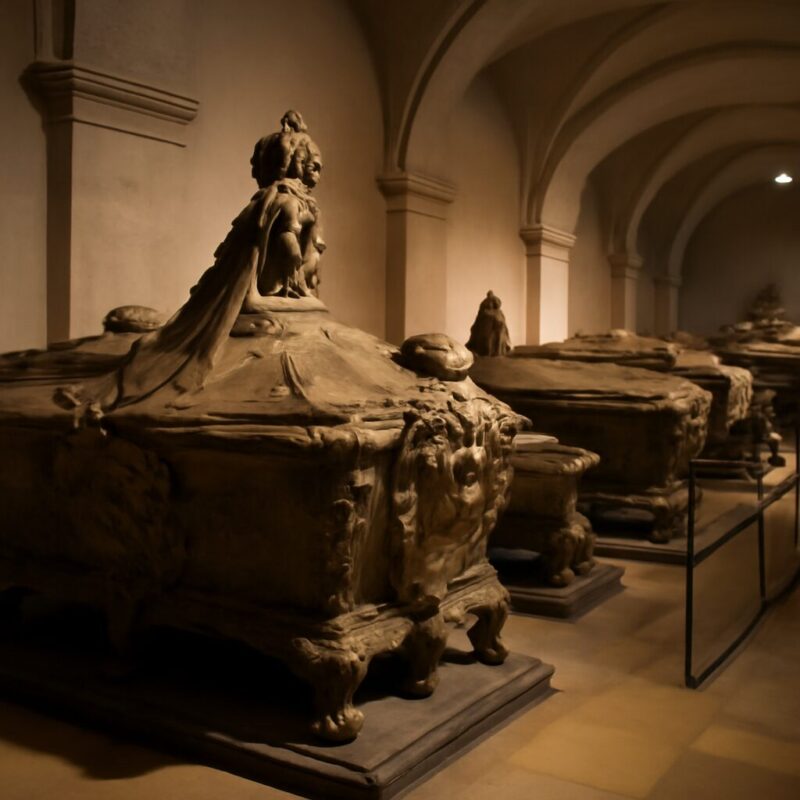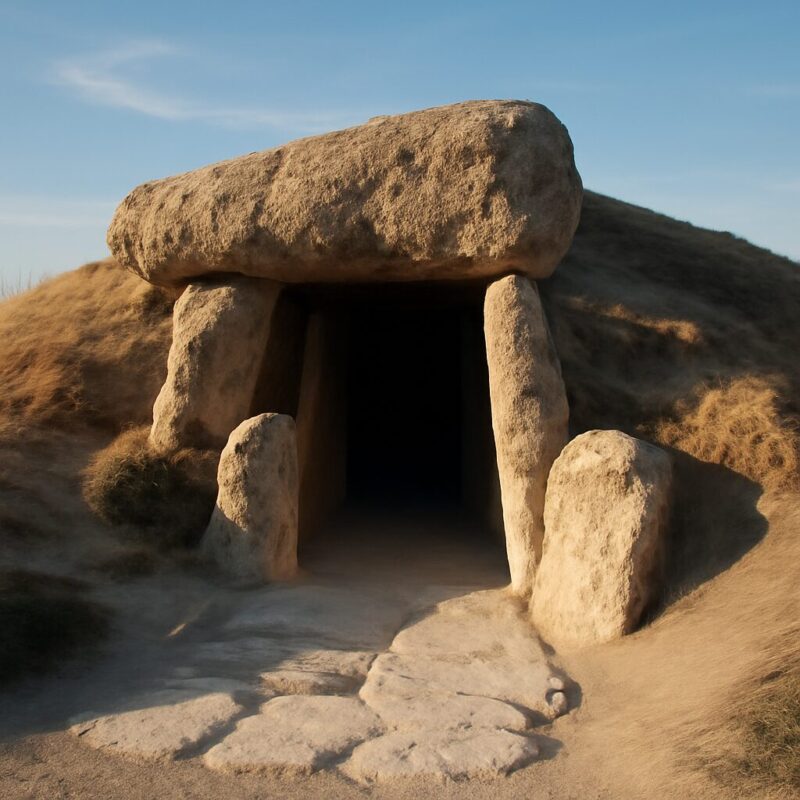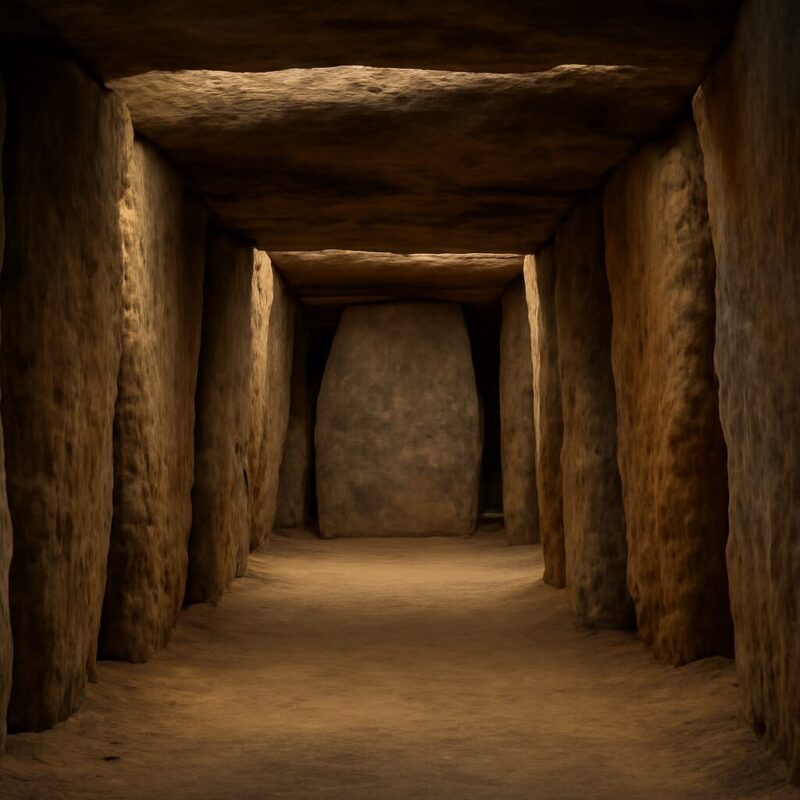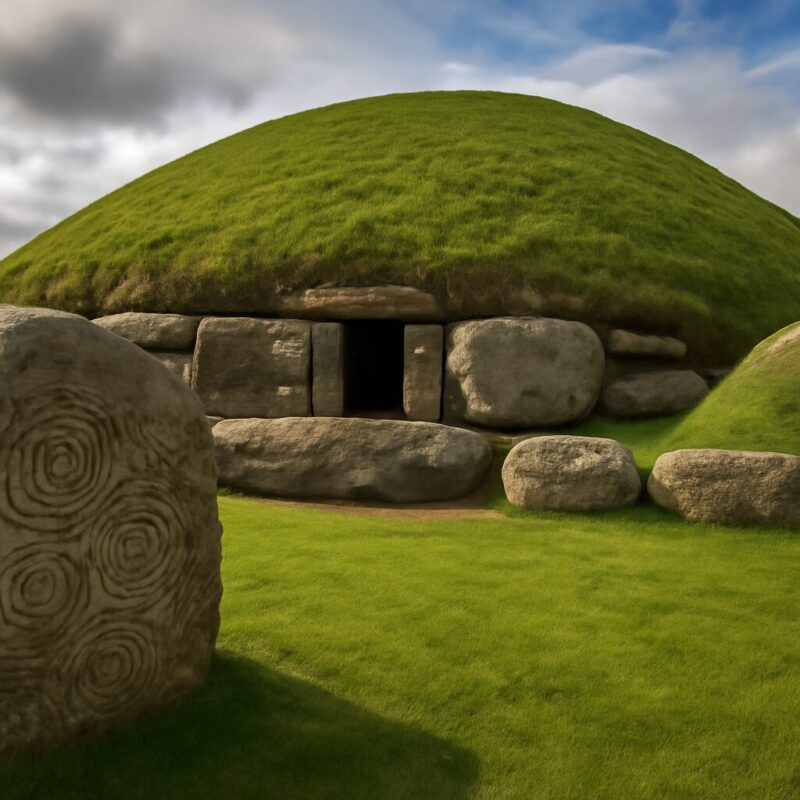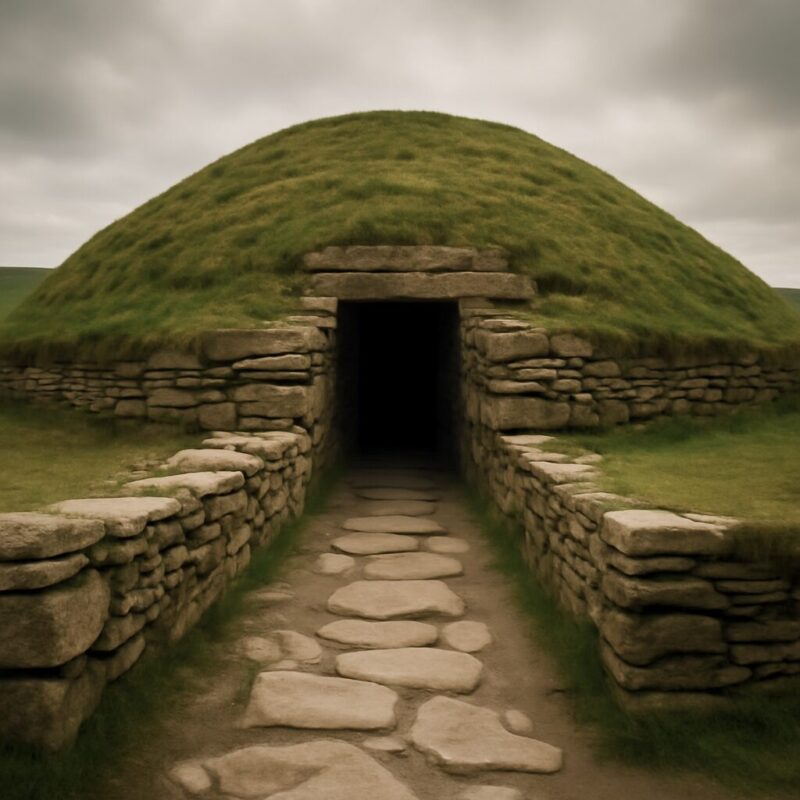
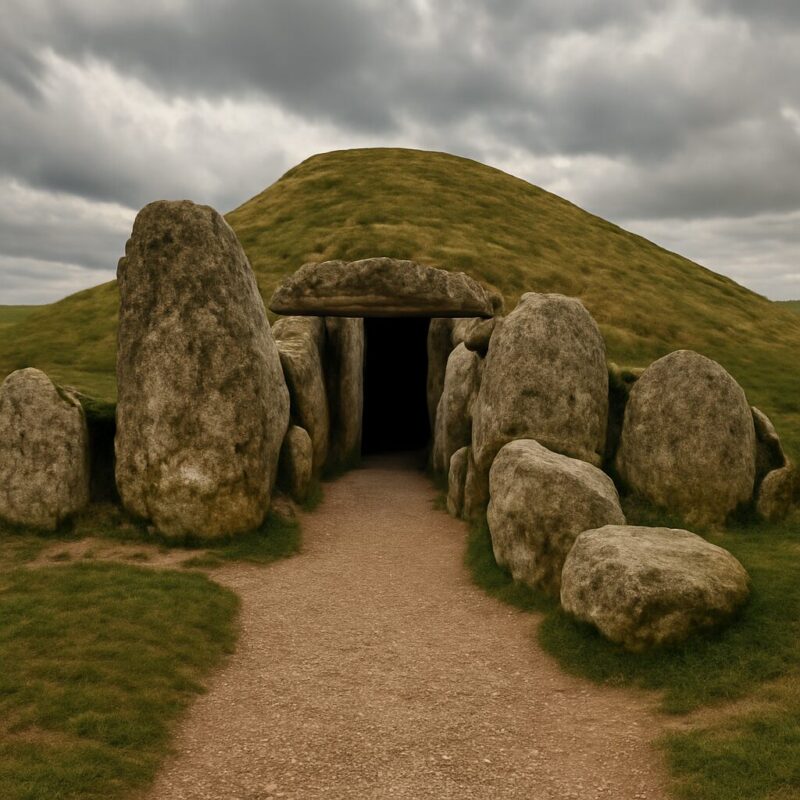
Imagine a grassy whale of a hill, resting for over five and a half millennia in the rolling chalk downland near Avebury. This is West Kennet Long Barrow, one of the largest and most impressive Neolithic chambered tombs in Britain. Its great stone snout points east, forever waiting for a dawn its builders knew well. Venture inside, past the huge blocking stones, and you walk into a cool, shadowy silence broken into five chambers. Here, for centuries, the bones of the dead were carefully laid, mingling ancestors with offerings. It’s a place of deep, quiet power—not a monument to death, but a house for the eternal, built when the very landscape itself was being woven into the fabric of belief.
Who Built West Kennet Long Barrow?
Who Built West Kennet Long Barrow?
West Kennet Long Barrow was built by communities of early Neolithic farmers in Britain, part of a wider cultural tradition often referred to as the Windmill Hill culture. These people were among the first to adopt agriculture in the British Isles, settling the landscape around 3700 BCE.
Why Was It Built?
The barrow served as a communal tomb, or chambered cairn, used for the collective burial of the dead over many centuries. Its construction, using massive sarsen stones and earth, represented a huge communal effort. This served not only as a final resting place but also as a permanent territorial marker and a focal point for rituals connecting the living with their ancestors and the spiritual world.
Related Structures from the Provided List
The builders of West Kennet Long Barrow were part of a widespread Neolithic tradition of constructing monumental tombs from large stones (megaliths). While none of the tombs on the provided list are from the exact same culture or location, the most conceptually similar structures are other monumental Neolithic burial mounds. For example:
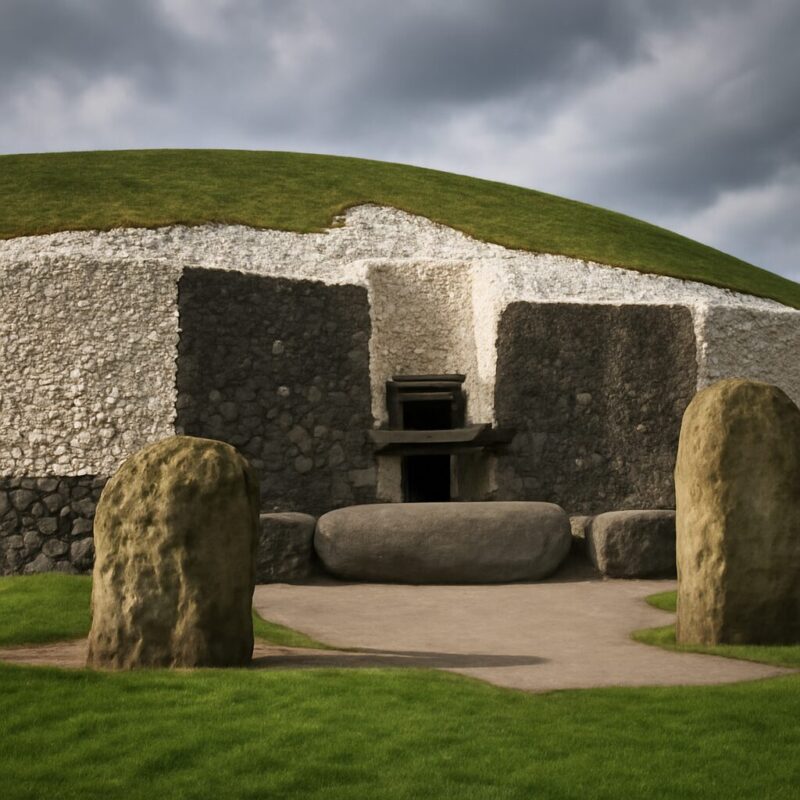
- Newgrange in Ireland is a later, but spectacular, example of a passage tomb built by Neolithic communities.
- Knowth is another major Irish passage tomb from the same complex as Newgrange.
- Maeshowe in Orkney, Scotland, is a superb example of a Neolithic chambered cairn, showing similar ritual and architectural concerns.
Other listed sites, such as the Dolmen de Menga and Dolmen de Soto in Spain, are also megalithic tombs from Neolithic Europe, representing parallel traditions in different regions.