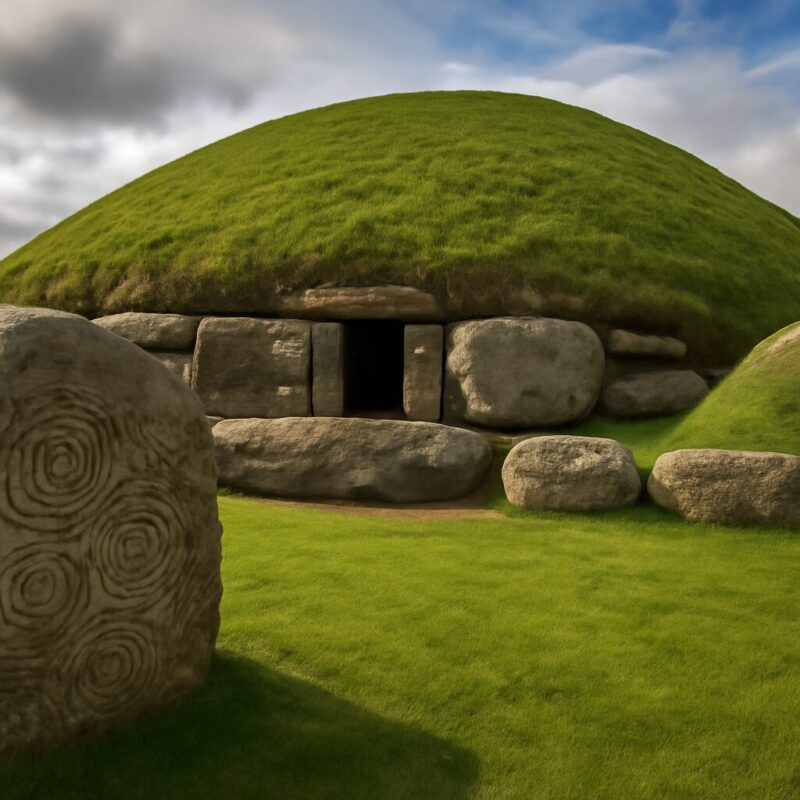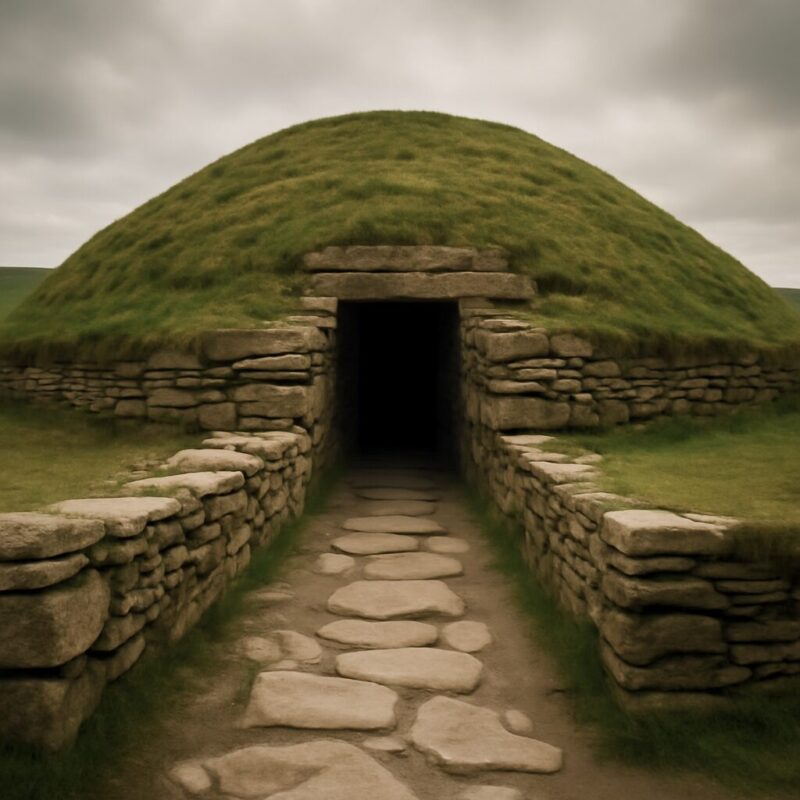
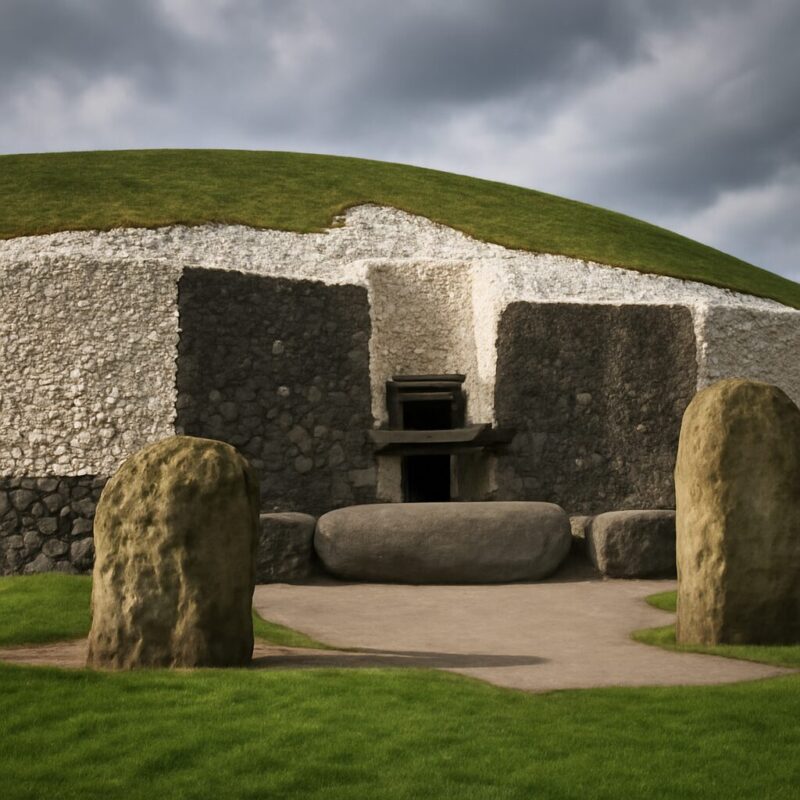
Imagine a structure older than Stonehenge, older than the pyramids of Giza, rising from the Irish landscape as a grass-covered dome. This is Newgrange, a Neolithic tomb built over five thousand years ago. Its most breathtaking secret is a precisely engineered roof-box above the entrance, designed so that on the winter solstice, the rising sun shoots a narrow beam of light deep into the central chamber, illuminating its ancient stones for just seventeen minutes. More than a grave, it was a temple to the cycles of the sun, a monument of staggering ambition that whispers of a sophisticated society deeply connected to the cosmos.
Who Built Newgrange?
Who Built Newgrange?
Newgrange was built by a sophisticated Neolithic farming community that inhabited the Boyne Valley region of Ireland. Archaeologists refer to this culture as part of the wider "passage tomb builders" of Atlantic Europe. These people were settled agriculturalists with a complex social and religious structure, possessing advanced knowledge of astronomy, engineering, and art.
Why Was Newgrange Built?
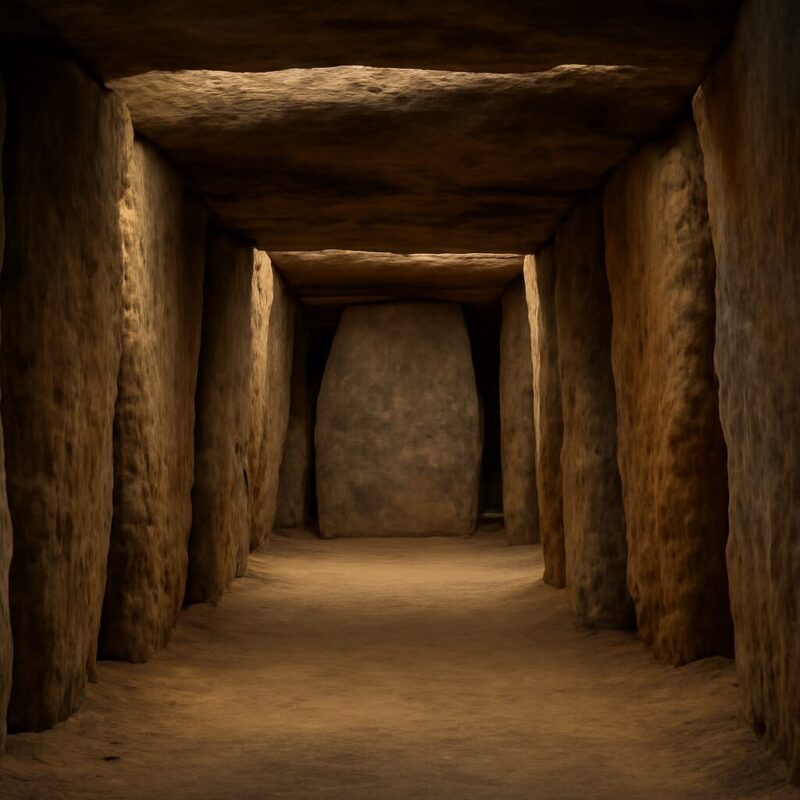
Newgrange served primarily as a passage tomb, a monumental structure for the ritual deposition of the cremated remains of the dead, likely from elite families or rulers. Its construction, however, indicates a purpose far beyond simple burial. The precise alignment of its passage so that the winter solstice sunrise illuminates the inner chamber suggests it was a site of profound spiritual and astronomical significance, likely linked to ancestor worship, rebirth cycles, and the agricultural calendar. It was a focal point for ceremony and a permanent marker of a powerful community's connection to the land and the cosmos.
Other Structures from the Same Culture
The same Neolithic culture in the Boyne Valley built a complex of monumental tombs, with Newgrange being the most famous. Two other major tombs in this complex, which together with Newgrange are designated as Brú na Bóinne, a UNESCO World Heritage Site, are:
- Knowth: This site features a large central mound surrounded by 18 smaller satellite tombs. It contains the largest collection of megalithic art in Western Europe.
While not on the provided list, the nearby tomb of Dowth completes the primary trio of major passage tombs at Brú na Bóinne.
Broader Cultural Connections
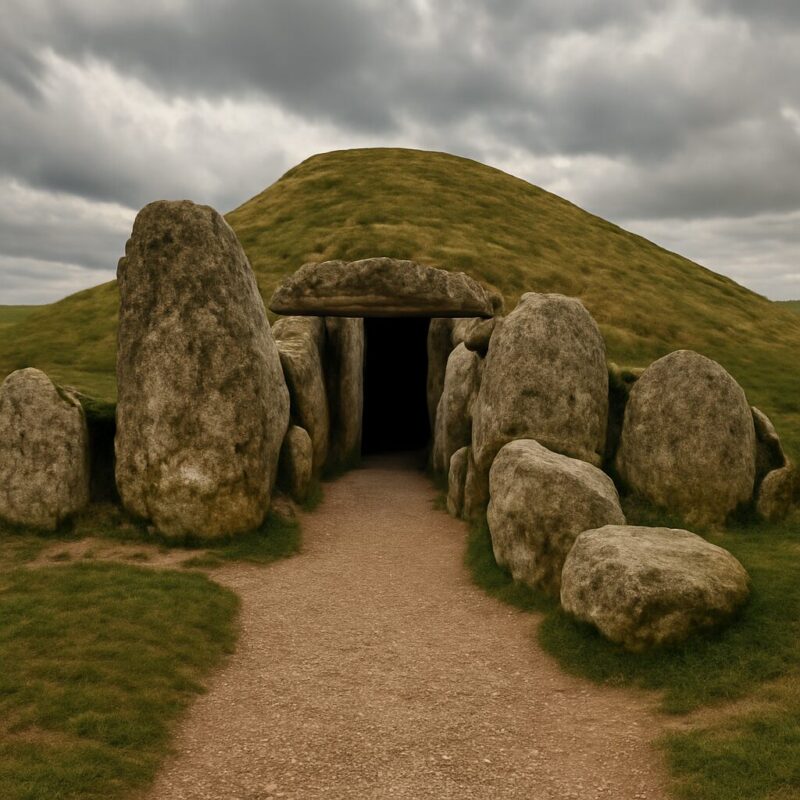
The passage tomb tradition is seen in other parts of Europe. A highly relevant and comparable structure from a similar Neolithic tradition in Britain is the West Kennet Long Barrow in England. While different in design, it shares the same fundamental purpose as a communal tomb and ceremonial site for a Neolithic farming society.