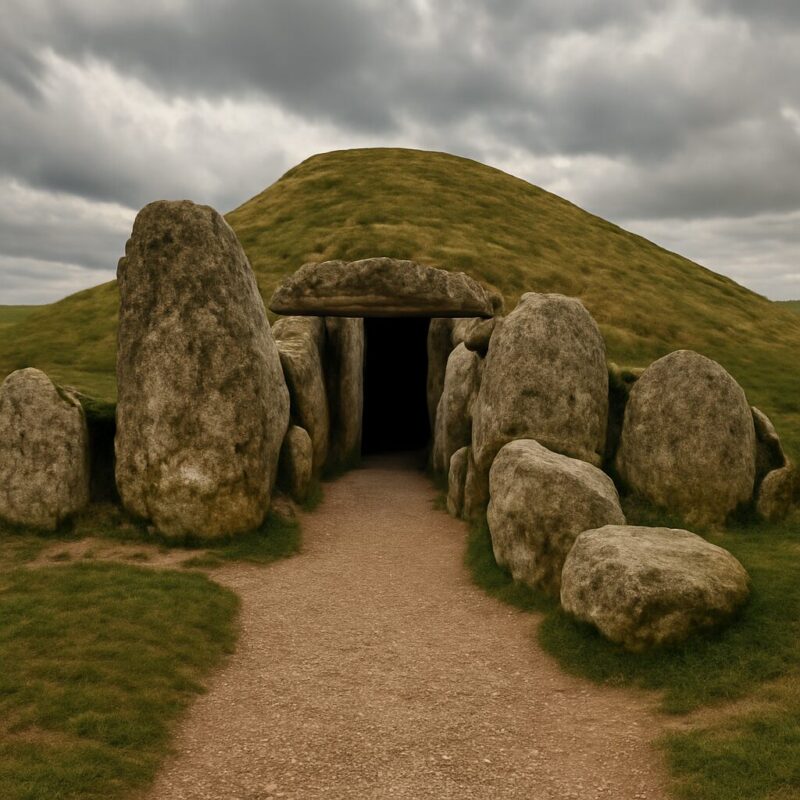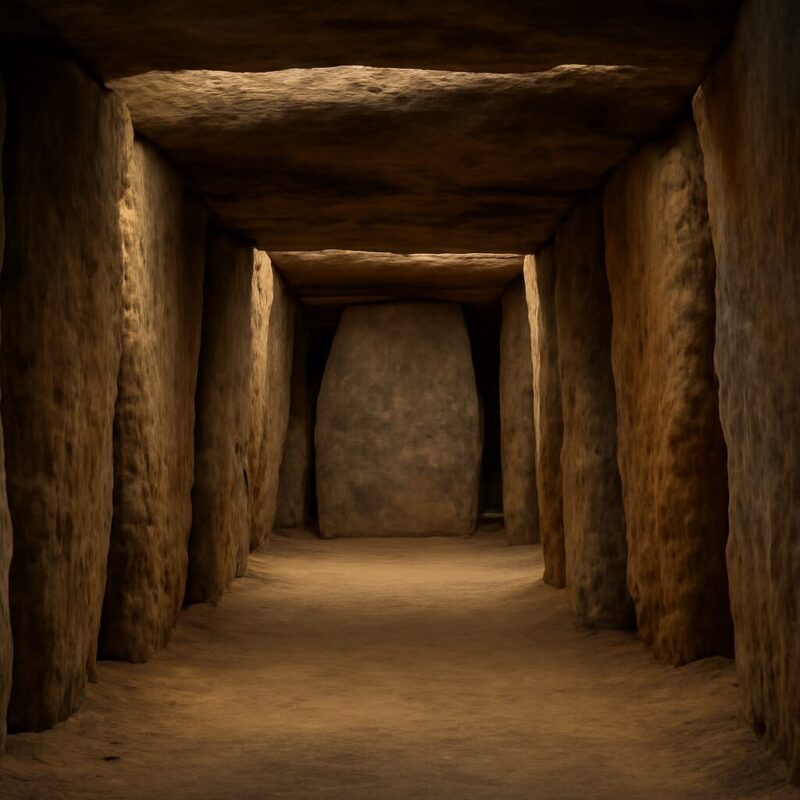
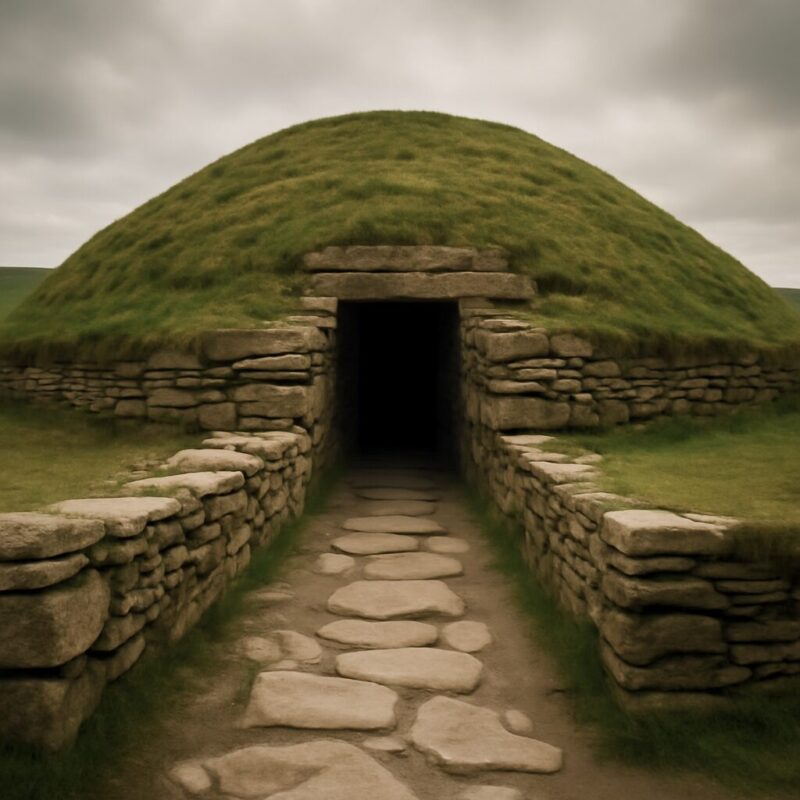
Imagine a grassy mound rising from the windswept Orkney landscape, a silent sentinel older than the pyramids of Giza. This is Maeshowe, a Neolithic tomb built with such precision that its entrance passage aligns perfectly with the setting sun of the winter solstice, flooding the central chamber with a narrow, breathtaking shaft of golden light. Inside, the air is cool and ancient, the walls constructed from colossal, finely fitted slabs of stone. But Maeshowe holds a more recent secret: the walls are scarred with intricate runic graffiti, left by Norse crusaders who sheltered here over 800 years ago. They speak of treasure, of ghosts, and even boast of a certain Ingigerth, "the most beautiful of women." It’s a place where Stone Age engineering and Viking mischief collide, a timeless chamber echoing with whispers from two vastly different worlds.
Who Built Maeshowe?
Who Built Maeshowe?
Maeshowe was built by the Neolithic people of Orkney, Scotland, around 2800 BCE. These people were part of a sophisticated farming society that flourished in the region, known for their monumental stone architecture, intricate art, and complex ceremonial practices.
Why Was Maeshowe Built?
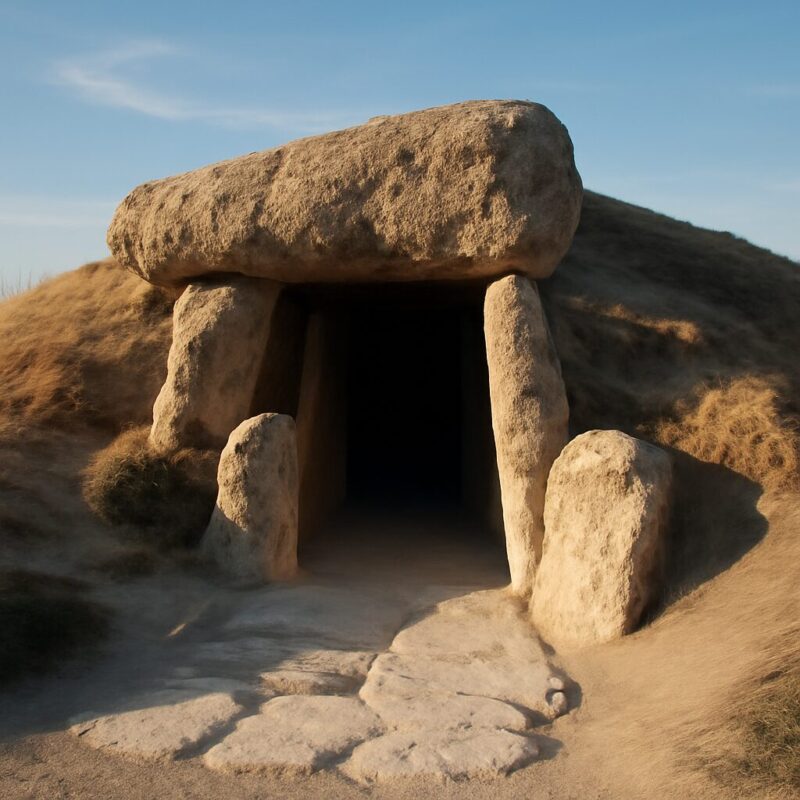
Maeshowe served as a chambered cairn, or passage tomb, designed as a communal burial place for the dead. Its precise alignment allows the setting sun of the winter solstice to shine directly down its long, low entrance passage, illuminating the inner chamber. This suggests it also functioned as a highly sophisticated astronomical observatory and a focal point for seasonal rituals, connecting the cycles of life, death, and rebirth with the cosmos.
The Culture and Other Monuments
The Neolithic Orcadians who built Maeshowe were part of a wider megalithic culture in Atlantic Europe. On Orkney itself, they created the Heart of Neolithic Orkney World Heritage Site, which includes the spectacular stone village of Skara Brae, the standing stones of the Ring of Brodgar, and the Stones of Stenness. These sites form a vast ritual landscape centered around themes of community, ancestry, and celestial observation.
Highly Relevant Comparable Tombs
In form and function, Maeshowe is most closely related to other large, corbelled passage tombs from the Neolithic period. The most direct comparisons from your list are:
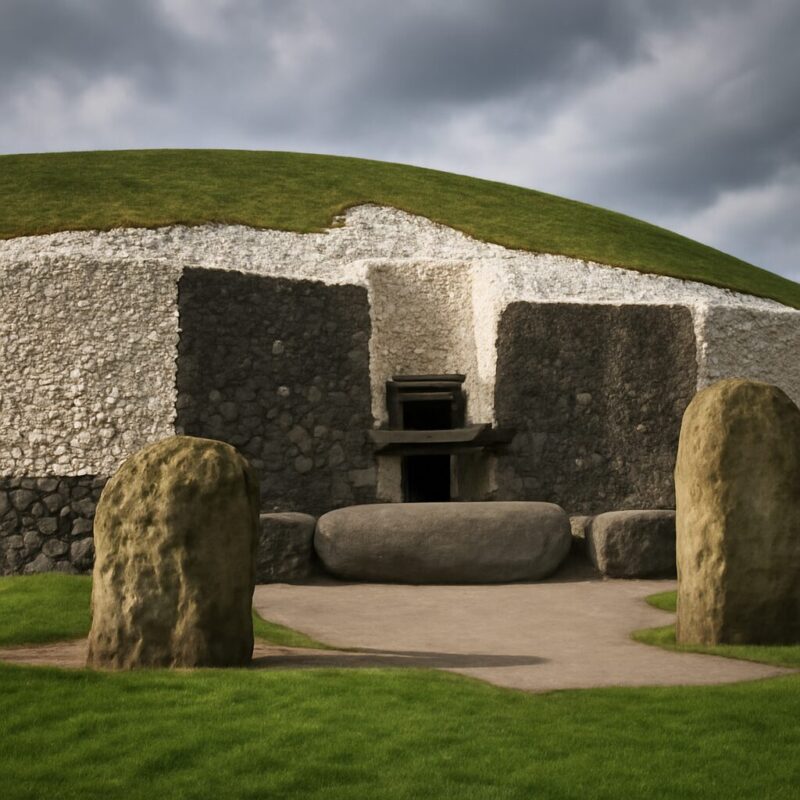
- Newgrange in Ireland, another passage tomb famous for its winter solstice alignment.
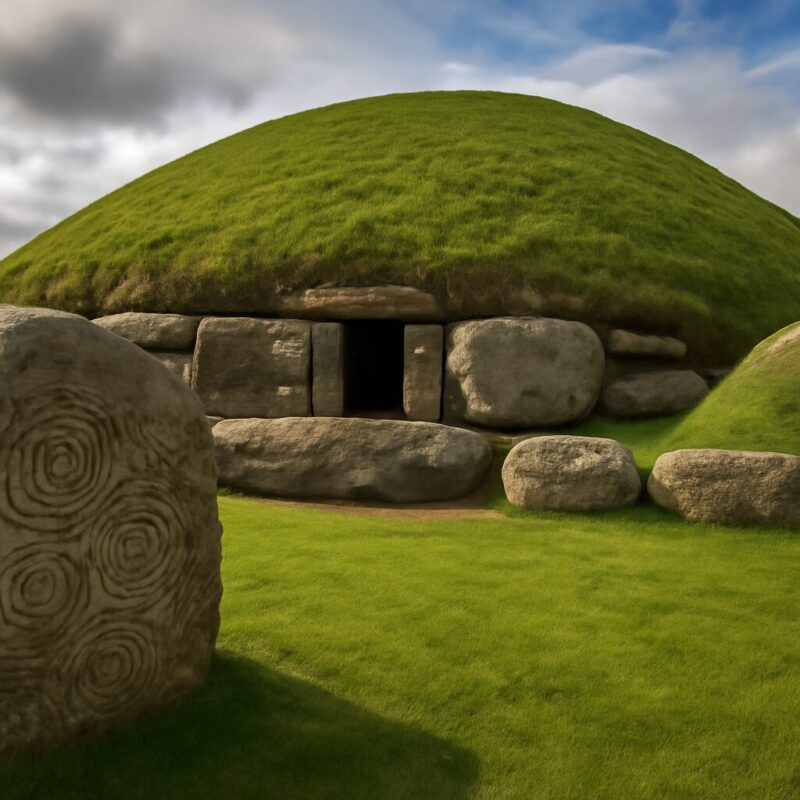
- Knowth, also in Ireland's Boyne Valley, which shares the passage tomb form and rich megalithic art.
- West Kennet Long Barrow in England, a large chambered tomb from the same broad cultural milieu.