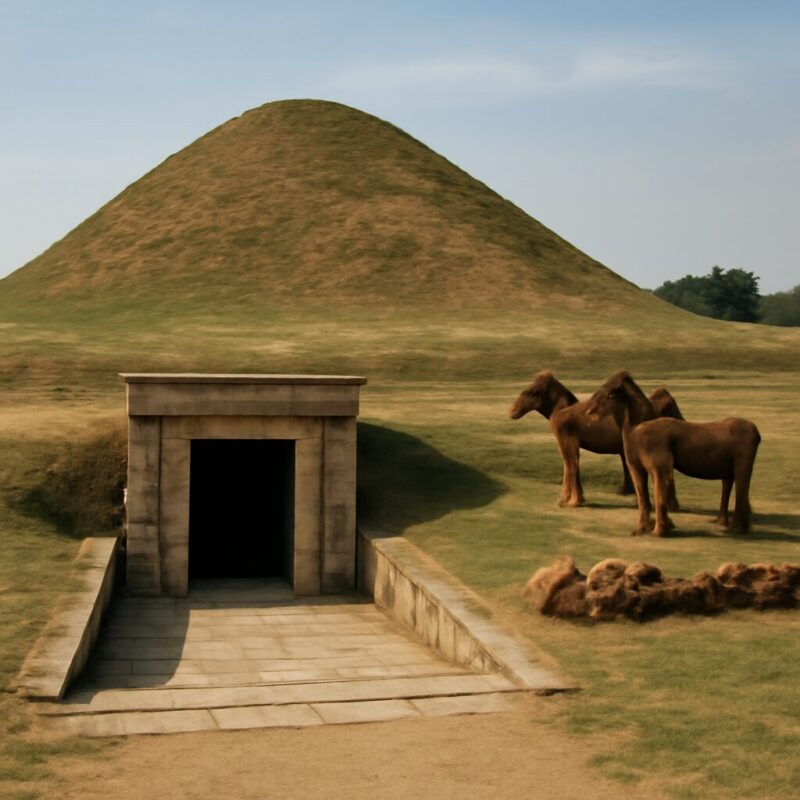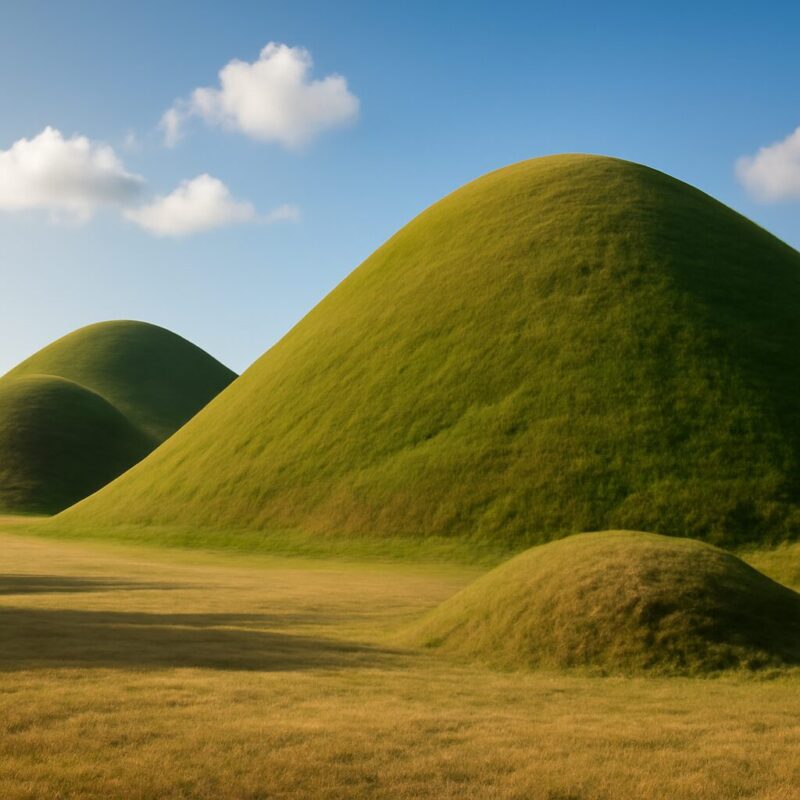
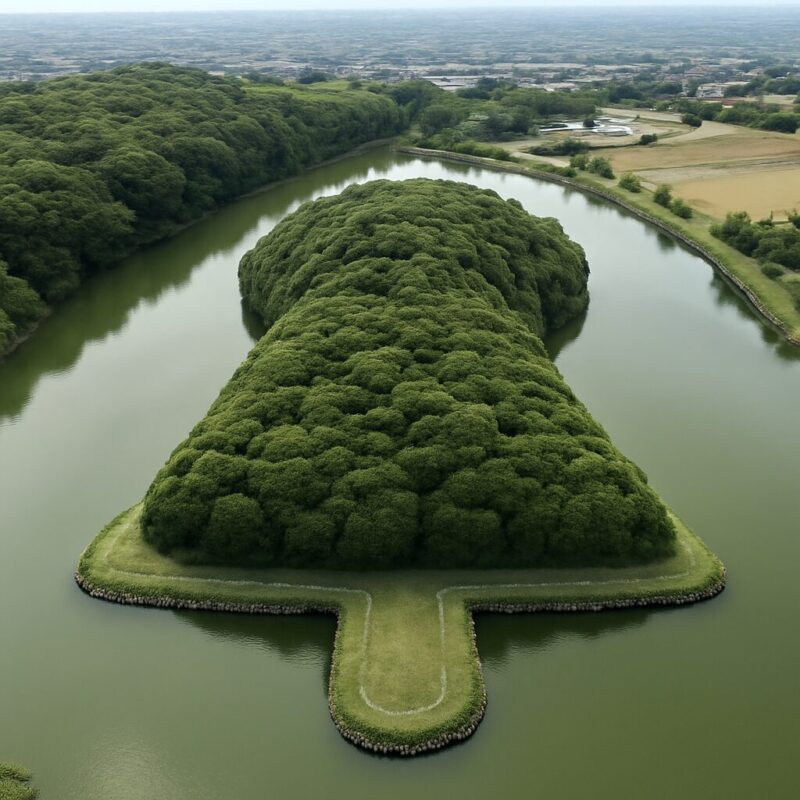
Scattered across the Japanese landscape like silent, moss-covered giants, the Kofun burial mounds are earthworks of staggering ambition. Built between the 3rd and 7th centuries, these are not mere graves but powerful political statements, carved from the land itself to project the divine authority of early rulers. The most iconic form is the zenpō-kōen-fun—a colossal keyhole shape when seen from above, blending a circular hill for the spirit with a trapezoidal front for ceremonies. Imagine the effort: thousands hauling earth to create islands for the dead, often moated and guarded by rings of haniwa clay figures—soldiers, dancers, even houses—meant to serve in the afterlife. To stand before the great Daisenryō Kofun, longer than five football fields and said to hold Emperor Nintoku, is to feel the weight of a kingdom's reverence, a monument meant to endure long after its occupant's name was forgotten.
Who Built Kofun burial mounds?
Who Built the Kofun Burial Mounds?
The Kofun burial mounds were built by the ruling elite of the Yamato state, a powerful and centralized polity that emerged in Japan during the Kofun period (c. 250–538 CE). This culture is considered the proto-historic precursor to the Japanese imperial line. The construction was a massive state undertaking, mobilizing vast labor forces from subordinate clans and communities across the Japanese archipelago.
Why Were the Kofun Built?
These monumental tombs served several interconnected purposes:
Political Power and Legitimacy
The sheer scale of the largest kofun, such as the Daisenryō Kofun (attributed to Emperor Nintoku), was a physical manifestation of the ruler's supreme authority and control over people and resources. Their construction reinforced social hierarchies and clan allegiances.
Religious and Spiritual Beliefs
Kofun were designed as the final resting places for deified chieftains or kings. The distinctive keyhole shape, often surrounded by moats, is thought to have had ritual significance, possibly representing a passage to the afterlife or a sacred enclosure separating the world of the dead from the living.
Cultural Unification
The widespread adoption of the keyhole mound form across Japan during this period is a key archaeological indicator of the spreading influence and unifying cultural force of the Yamato polity.
What Else Did This Culture Build?
The Kofun period is defined almost exclusively by its burial practices. Beyond the mounds themselves, the culture is renowned for the elaborate grave goods placed within, including Haniwa (terracotta clay figures) that were arrayed on and around the mounds. These served as ceremonial protectors and representations of the deceased's world. While not a "tomb" in the same sense, the culture's legacy directly led to the establishment of Japan's first permanent capitals and the great Buddhist temples of the subsequent Asuka period.
Highly Relevant Comparative Structures
The practice of building monumental earthworks for elite burial is a global phenomenon. In the context of mound-building cultures, the Mound Builder burials of North America (such as at Cahokia or Etowah) and the Cahokia Mound burials share a similar social function—using large-scale earthworks to project political and religious authority. For another Pacific island culture that built monumental stone tombs for royalty, you can explore the Nan Madol tombs.