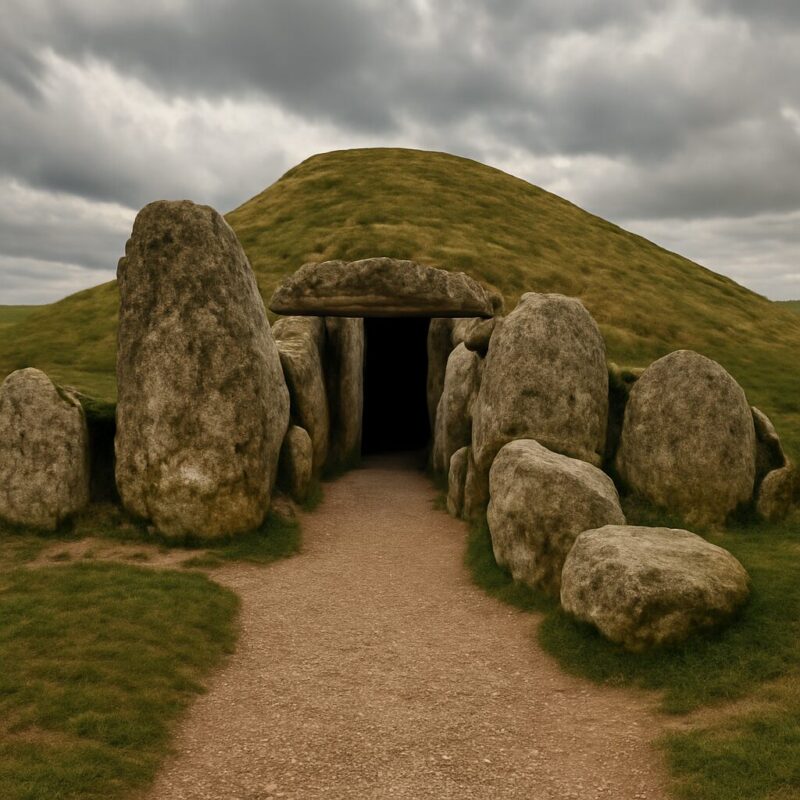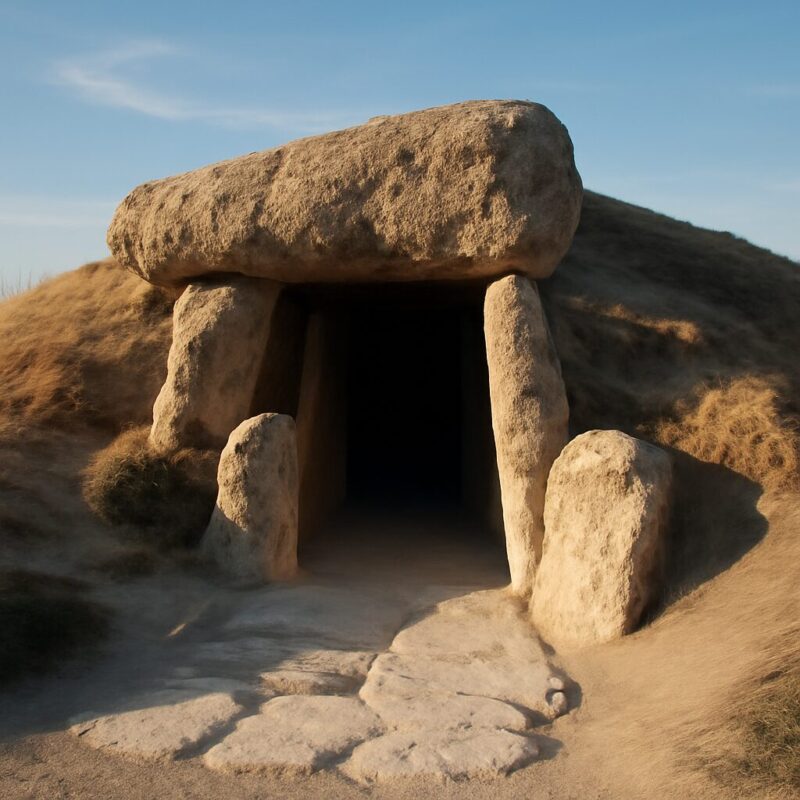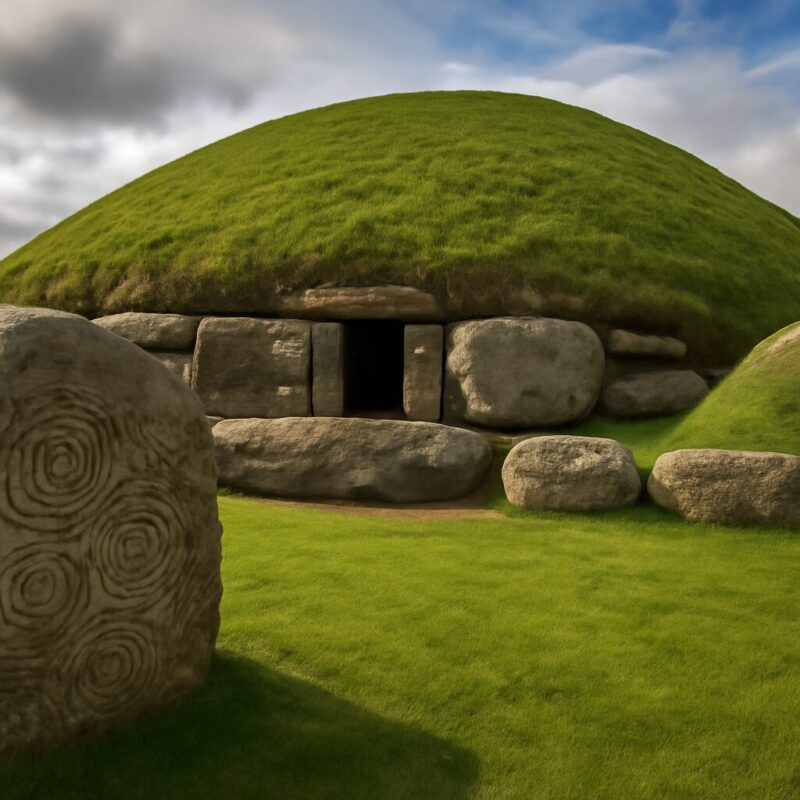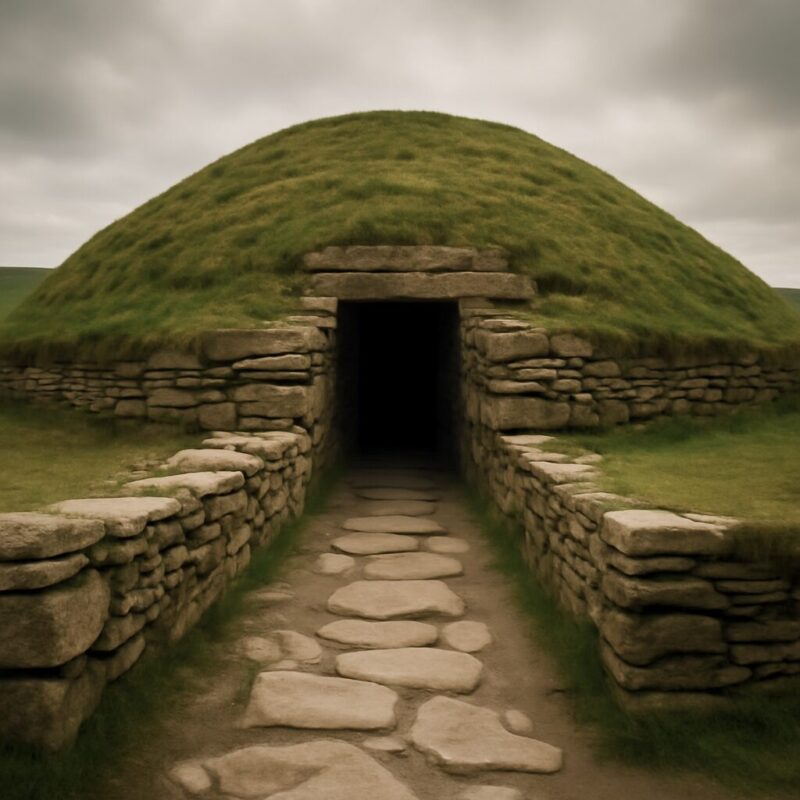
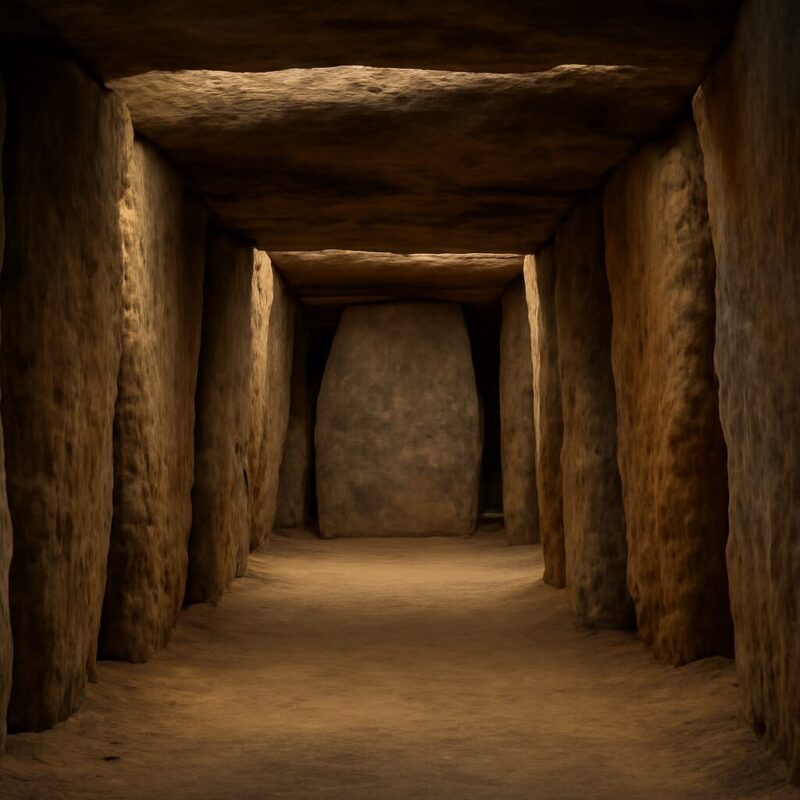
Imagine a corridor stretching into darkness, not of stone, but of colossal slate slabs hauled into place over six thousand years ago. This is the Dolmen de Soto, a monumental tomb in Spain that feels less like an archaeological site and more like a portal. Entering its 21-meter passage, you walk where Neolithic clans once carried their dead, the ceiling pressing low, the walls etched with enigmatic spirals, suns, and human figures—ancient graffiti that flickers in the torchlight. The genius of its construction reveals itself at the equinoxes, when the rising sun shoots a blade of light down the entire corridor to illuminate the deepest chamber. For a breathtaking moment, the divide between the living and the ancestors dissolves, just as the builders intended.
Who Built Dolmen de Soto?
Who Built Dolmen de Soto?
The Dolmen de Soto was built by a Neolithic community that was part of the broader Megalithic culture of southwestern Iberia, flourishing between approximately 3000 and 2500 BCE. These were complex, semi-sedentary farming societies with sophisticated social organization and religious beliefs centered on ancestor veneration and cosmological cycles.
Why Was It Built?
It was constructed as a collective burial tomb and a ceremonial site. The monument's design, a long corridor leading to a burial chamber, was intended for sequential, multi-generational burials. Its precise astronomical alignment—where the rising equinox sun illuminates the entire inner chamber—suggests it also served as a ritual space connecting the realms of the living, the dead, and the cosmos.
Other Tombs from the Same Culture
The builders of Dolmen de Soto were part of the same Iberian Megalithic tradition responsible for other monumental tombs in the region. A highly relevant and famous example is the Dolmen de Menga, located in Antequera, Spain. Like Dolmen de Soto, it is a massive gallery grave and represents one of the largest and most impressive megalithic structures in Europe.