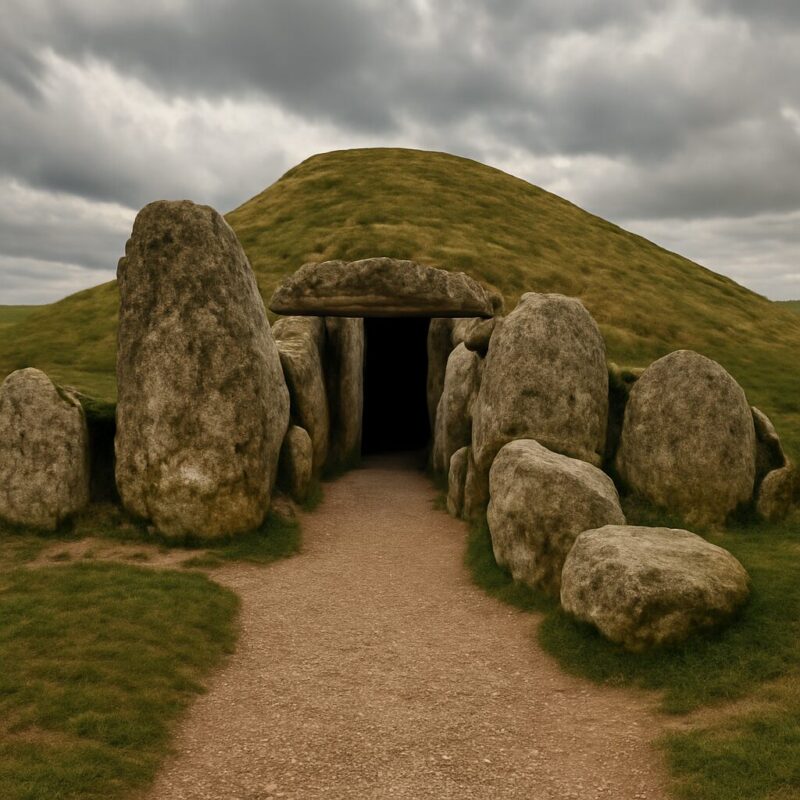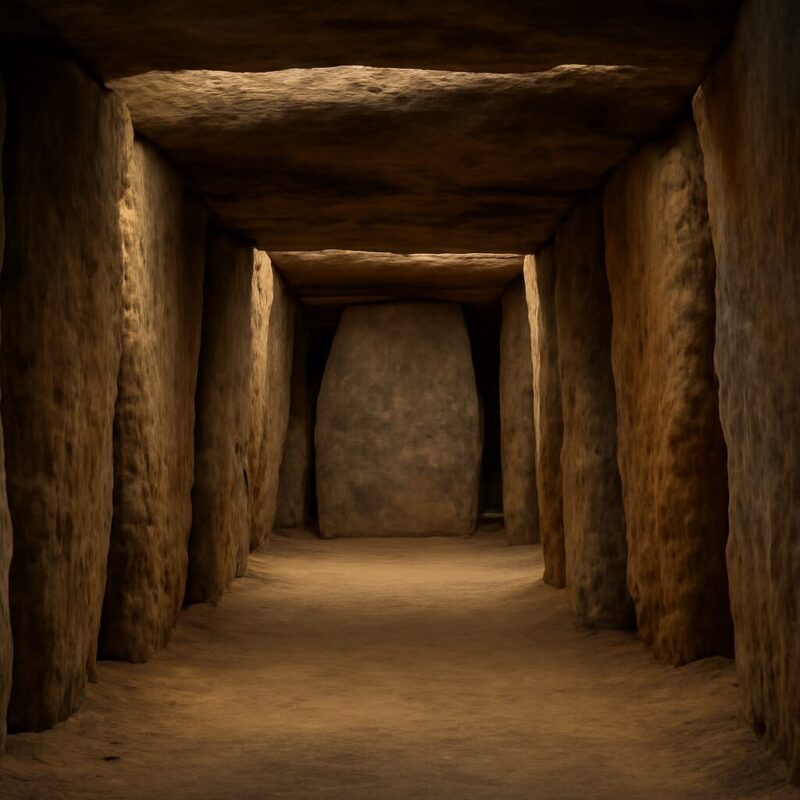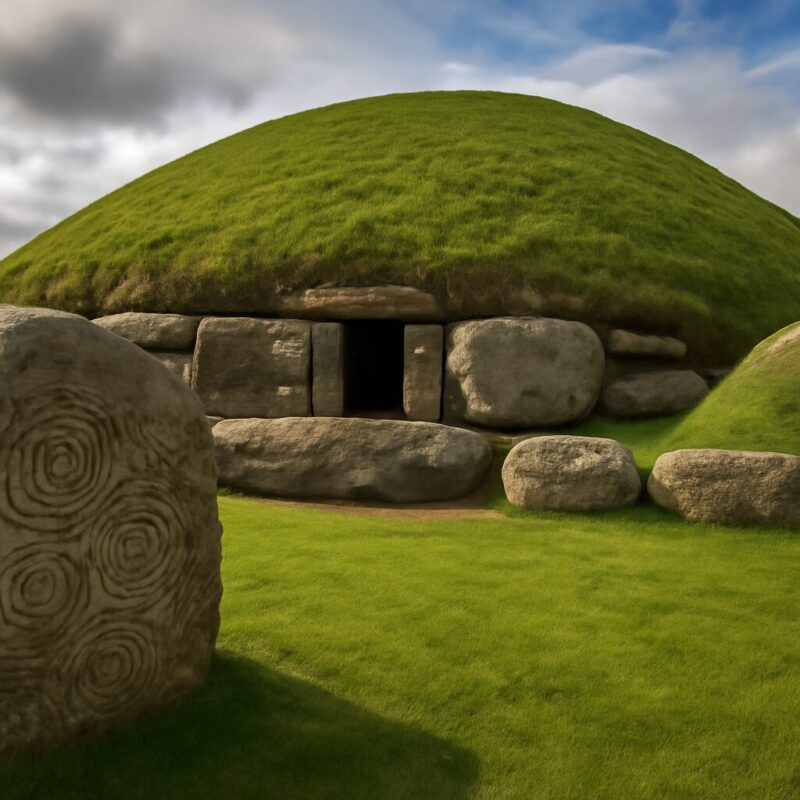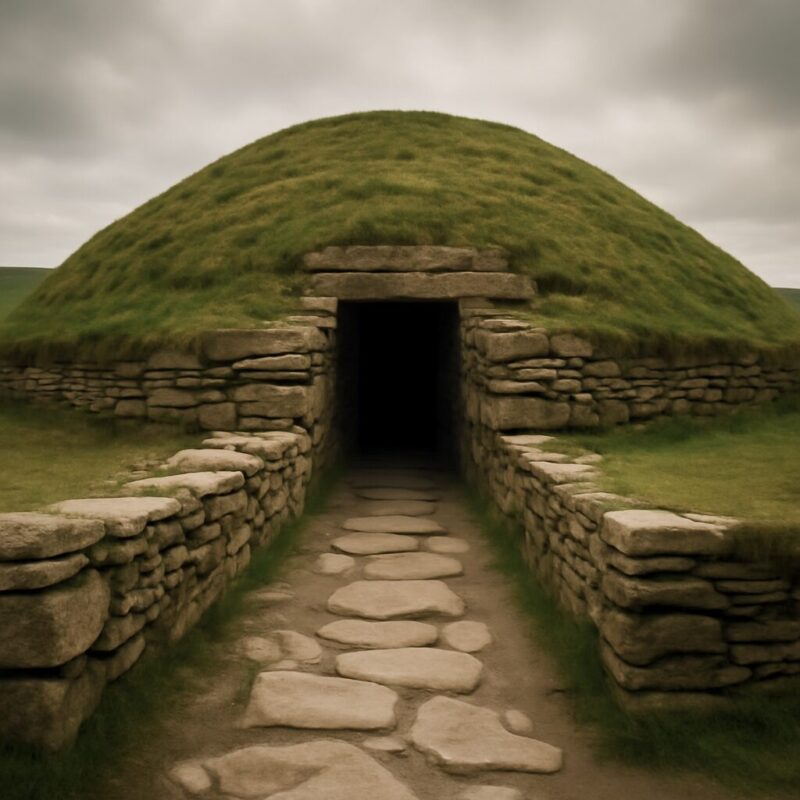
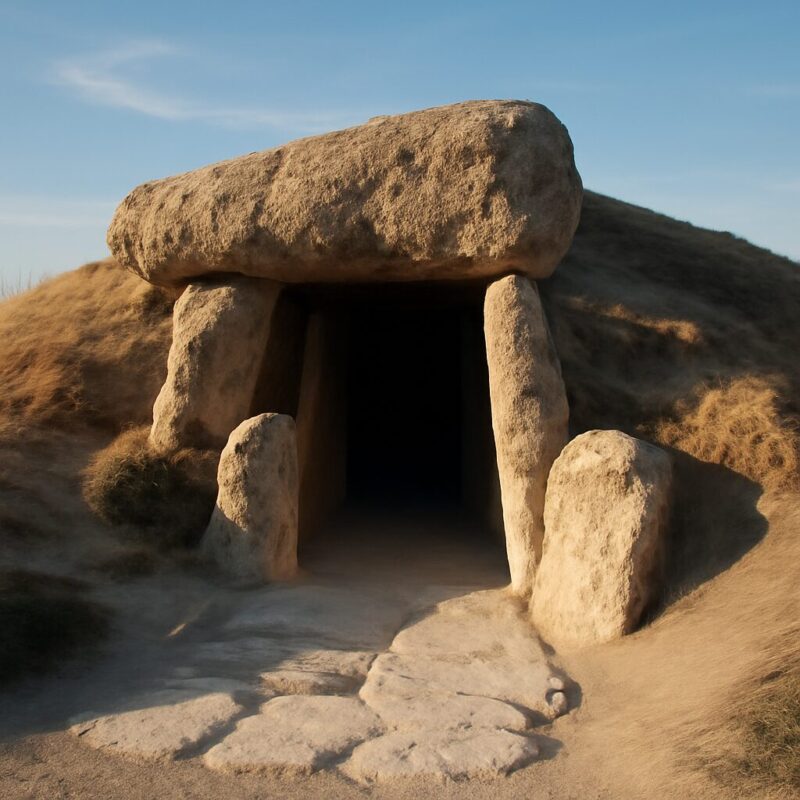
Imagine a landscape of rolling olive groves, baked golden under the Andalusian sun. Here, near Antequera, the earth holds a secret older than Stonehenge, older than the pyramids. This is the Dolmen de Menga, a monument that feels less like a tomb and more like a cathedral built for giants. Its colossal capstones, some weighing over 180 tons, were hauled and raised by a Neolithic community with astonishing ambition. Walking into its long, corridor-like chamber is a humbling experience; the scale is immense, the air cool and still. It’s not just a pile of old rocks—it’s a deliberate alignment, a stone telescope pointing toward the nearby Peña de los Enamorados, a mountain that resembles a sleeping giant’s face. This was a place of profound ritual, where the living communed with their ancestors and the very axis of the world felt tangible beneath those immense, timeless slabs.
Who Built Dolmen de Menga?
The Builders of Dolmen de Menga
The Dolmen de Menga was built by a Neolithic society in what is now Andalusia, Spain, during the 3rd millennium BCE. Archaeologists attribute its construction to the people of the Megalithic culture of the Iberian Peninsula. This was a collective, agrarian society with sophisticated social organization, capable of mobilizing labor for large-scale communal projects.
Purpose and Function
It was constructed as a collective burial site or passage grave, serving as a necropolis for many individuals over generations. Its monumental scale and orientation suggest it also functioned as a ceremonial and territorial marker, reinforcing social cohesion and ancestral ties to the land. The alignment of its central axis with nearby natural landmarks points to potential astronomical or cosmological significance.
Related Megalithic Structures
This same Megalithic culture built numerous other dolmens and passage graves across the region. A highly relevant and contemporary example is the nearby Dolmen de Soto, also in Andalusia, which shares similar architectural features and ritual purposes.
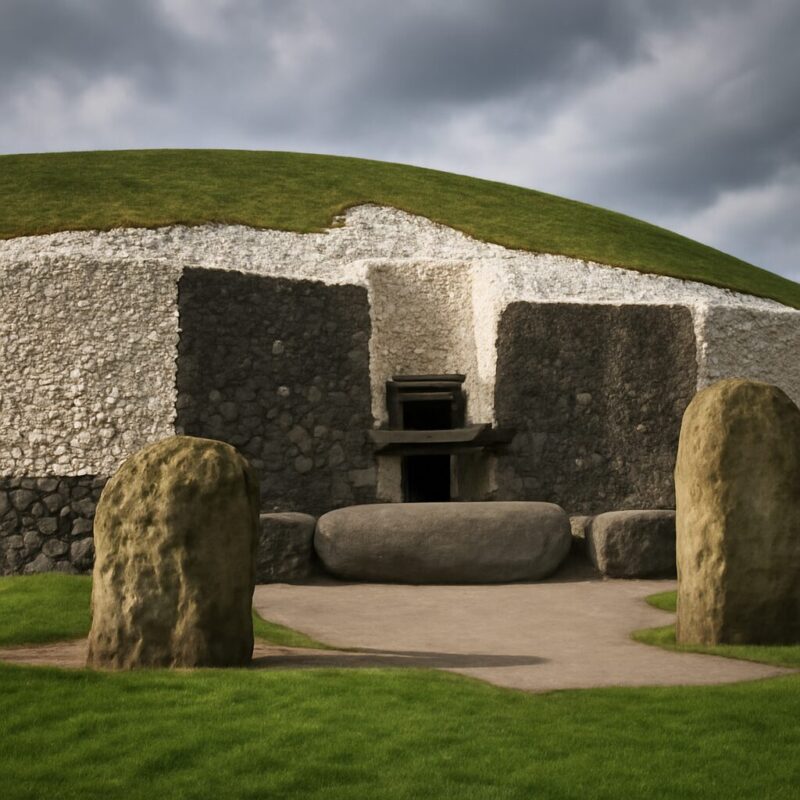
Furthermore, the tradition of building massive, corbel-vaulted passage graves for collective burial is a hallmark of European Neolithic societies. While not built by the same specific culture, the Newgrange tomb in Ireland and the Knowth complex represent parallel traditions in Atlantic Europe, demonstrating the widespread megalithic phenomenon.