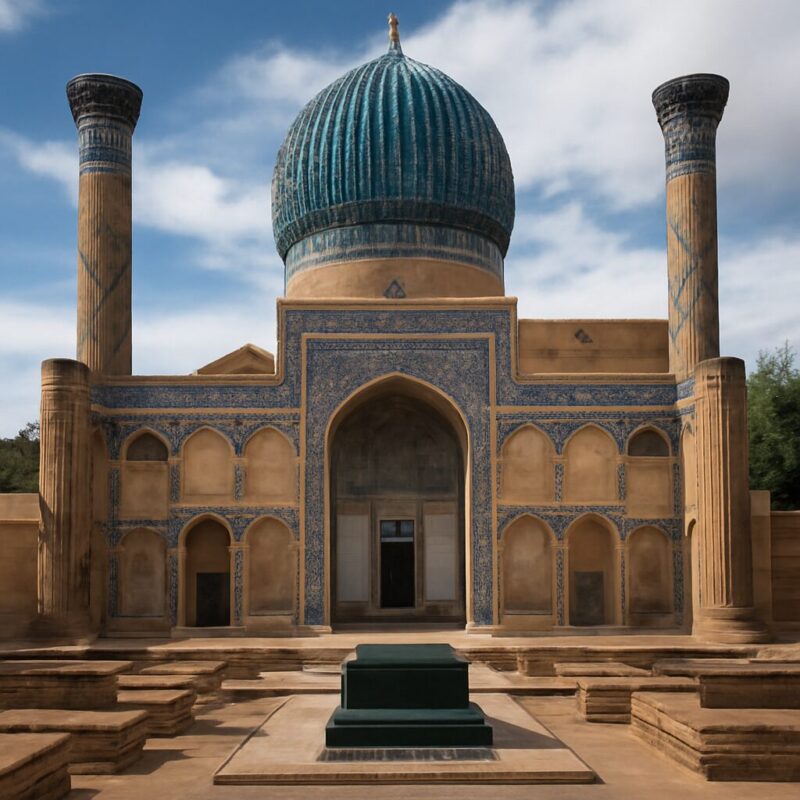
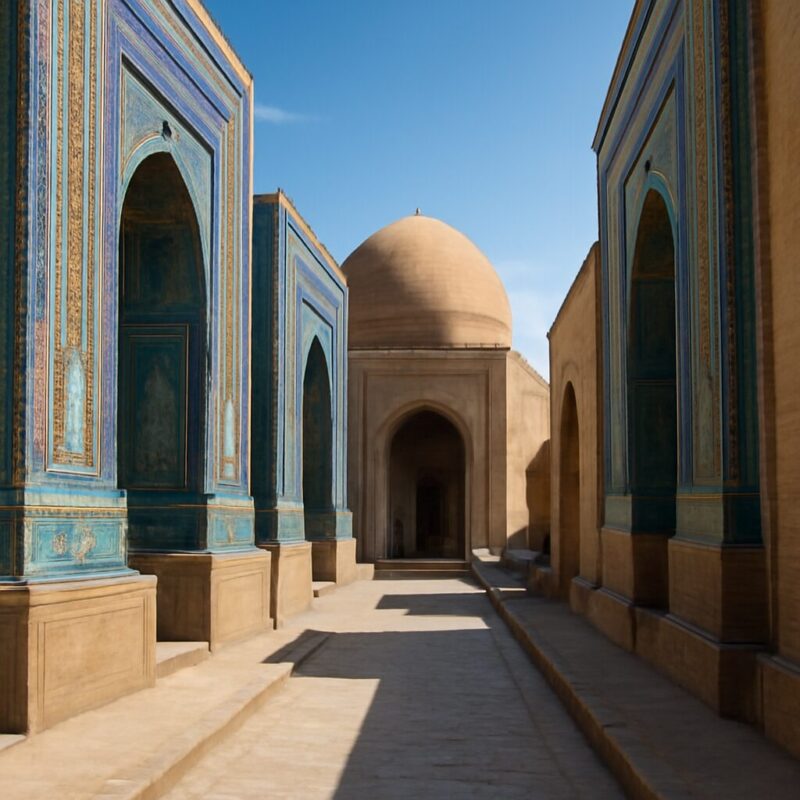
Shah-i-Zinda isn't so much a single tomb as a street of the dead, a shimmering necropolis climbing a hillside in Samarkand. Its name, meaning "The Living King," whispers the legend of a cousin of the Prophet Muhammad who, beheaded, walked here with his own head to find eternal rest. The reality is a breathtaking cascade of over twenty mausoleums, a frozen river of turquoise, cobalt, and lapis lazuli tiles flowing down an ancient staircase. Each facade, a masterpiece of intricate floral patterns and swirling calligraphy, competes for heaven's attention, the shimmering majolica and terracotta glowing under the Central Asian sun. To walk its narrow, shadowed alley is to traverse centuries of devotion, where the silence is thick with the presence of Timurid princesses, revered saints, and nobles, all gathered in this city of blue for eternity.
Who Built Shah-i-Zinda?
Who Built Shah-i-Zinda and Why?
Shah-i-Zinda, meaning "The Living King," is a necropolis in Samarkand, Uzbekistan. It was not built by a single individual but developed over many centuries, primarily between the 11th and 19th centuries. Its construction is deeply tied to the legend of Qutham ibn Abbas, a cousin of the Prophet Muhammad, who is said to have brought Islam to the region and was martyred here. His shrine, the site's focal point, was believed to house a "living king," giving the complex its name.
The Builders and Cultural Context
The most significant period of construction occurred under the rule of the Timurid Empire in the 14th and 15th centuries. Timur (Tamerlane) and his grandson, the astronomer-king Ulugh Beg, were major patrons. They commissioned mausoleums for their family members, nobility, and religious elites, transforming the site into a prestigious royal cemetery. The architecture is a stunning showcase of Timurid design, characterized by towering portals, ribbed domes, and an unparalleled mastery of glazed tilework in vibrant blues, turquoises, and whites.
Other Relevant Constructions
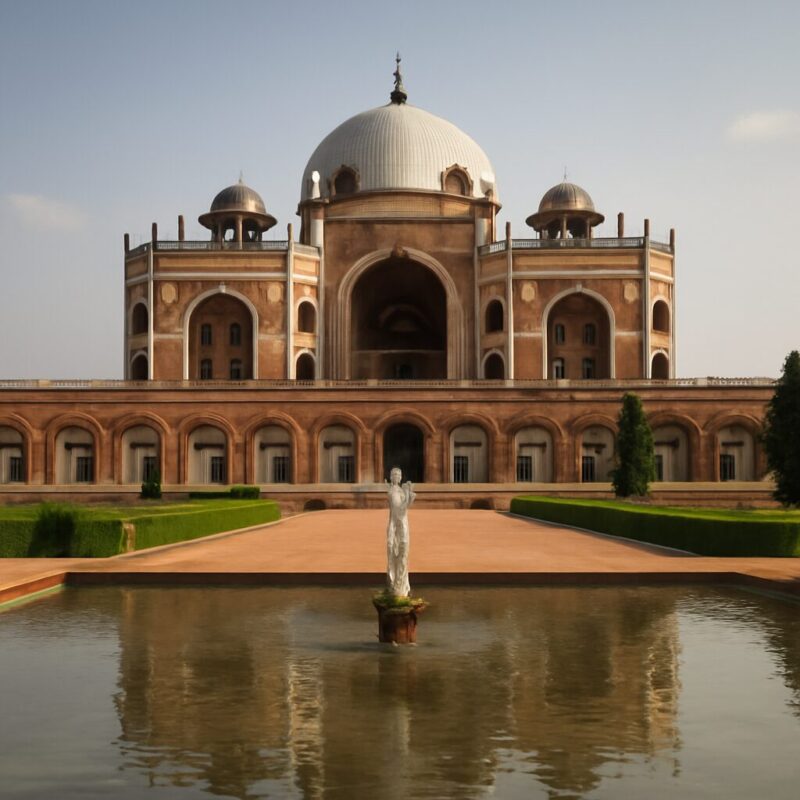
The Timurid dynasty, responsible for the most iconic structures at Shah-i-Zinda, also built other monumental tombs. The most famous is the Tomb of Timur (Gur-e Amir) in Samarkand, which became the model for later Mughal tombs, including the Taj Mahal. Another key figure from a different but related Central Asian tradition is the Seljuk Empire, which produced notable funerary architecture like the Seljuk tombs of Ahlat in Turkey.