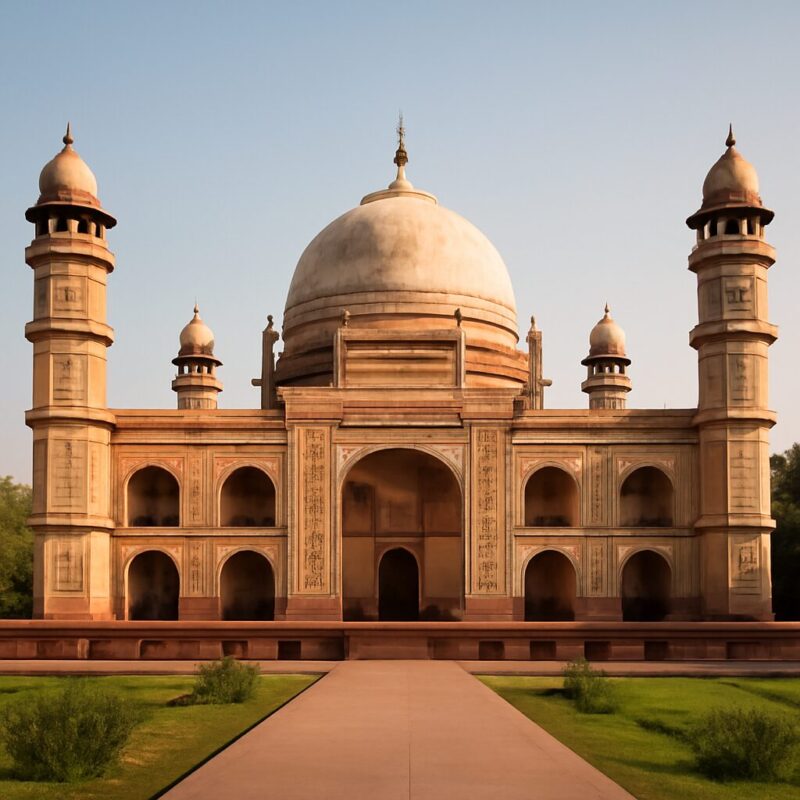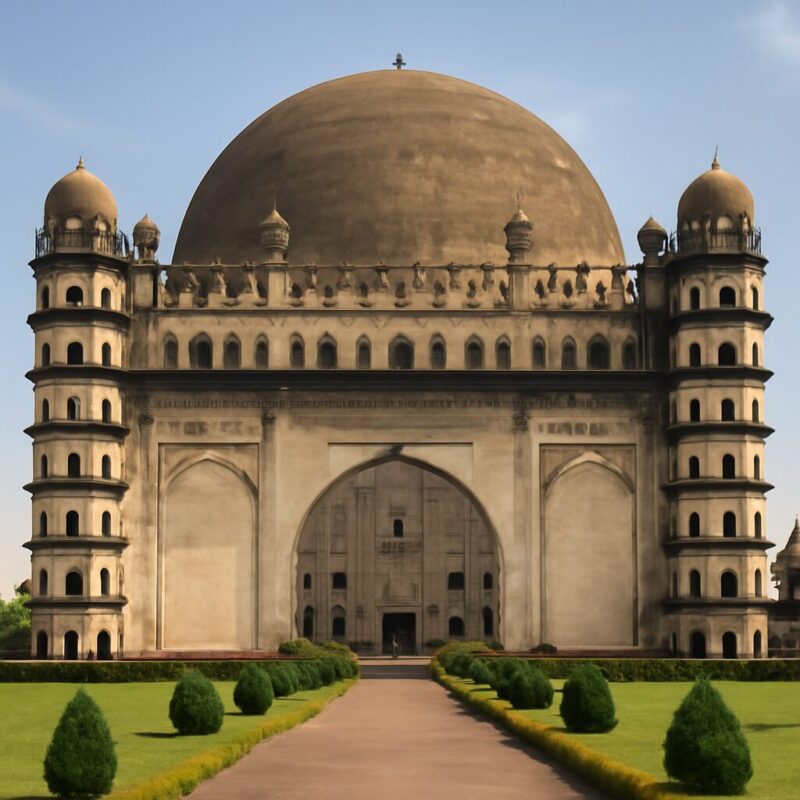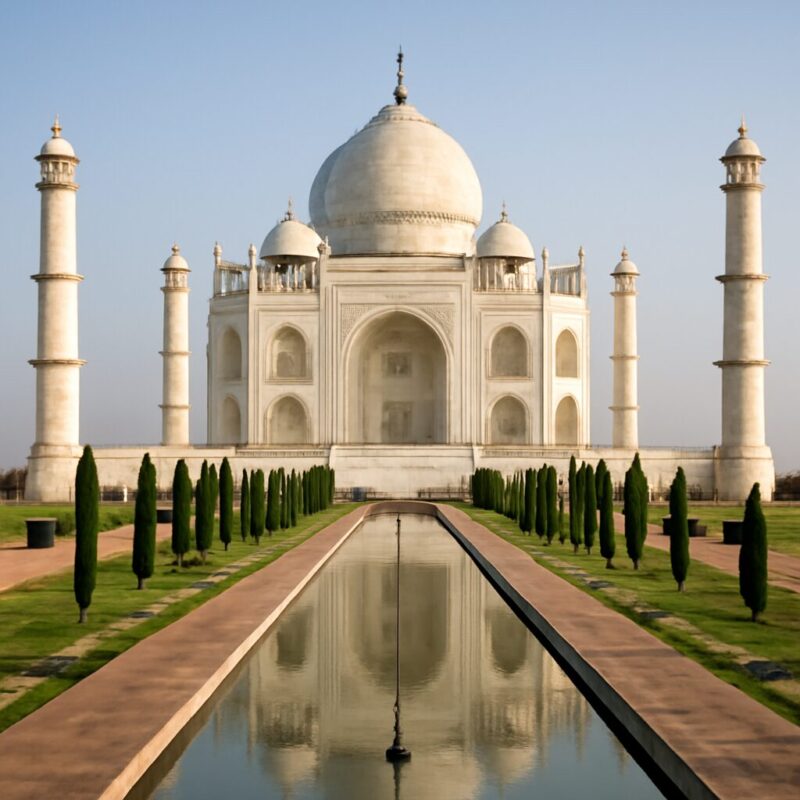
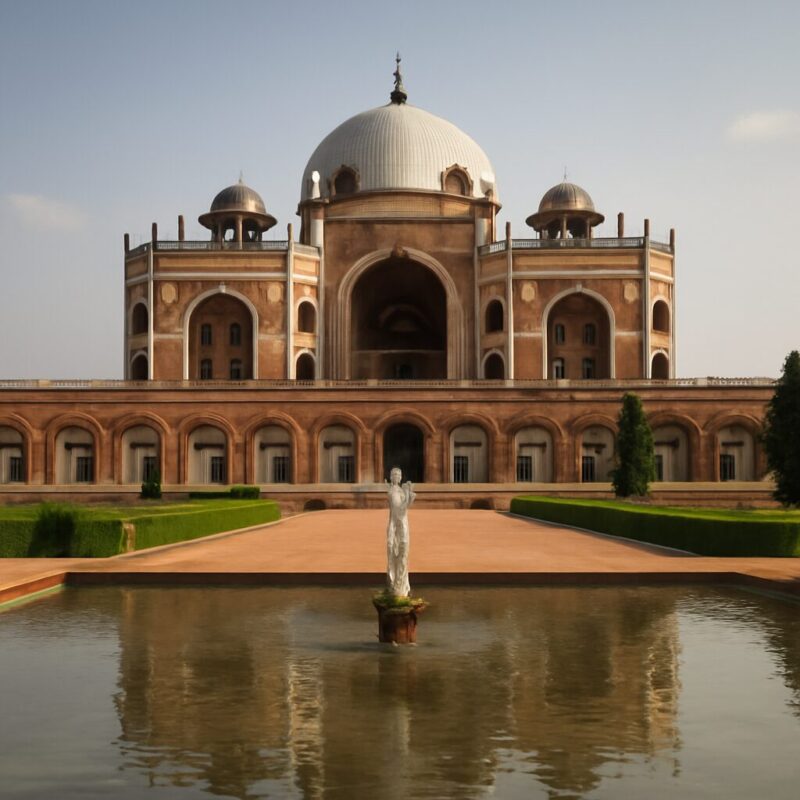
In the heart of Delhi, a garden of stone and symmetry rises—Humayun’s Tomb, the first grand dynastic mausoleum of the Mughals. It whispers of a grief-stricken wife, Haji Begum, who built this paradise for her emperor husband. Walking through its sun-drenched charbagh, the geometric gardens split by water channels, you feel the shift from the earthly to the eternal. The towering dome, a ruddy sandstone marvel banded with white marble, seems to float above the arched alcoves and intricate jaalis. More than a grave, it’s a poignant blueprint; its serene harmony and perfect proportions would later echo in the Taj Mahal, making this not just a tomb, but the quiet ancestor of an empire’s most famous love song.
Who Built Humayun’s Tomb?
Who Built Humayun's Tomb?
Humayun's Tomb was commissioned by his first wife and chief consort, Empress Bega Begum (also known as Haji Begum), in 1569-70. It was built to serve as the final resting place for the second Mughal Emperor, Nasir-ud-Din Muhammad Humayun, who died in 1556.
Why Was It Built?
The tomb was constructed primarily as an act of spousal devotion and to honor the deceased emperor. Its construction, which began over a decade after Humayun's death, also served a significant political and cultural purpose. It established a dynastic burial ground for the Mughals in their new capital of Delhi and represented a powerful statement of imperial legitimacy and permanence. Architecturally, it was a landmark project that synthesized Persian and Indian building traditions, setting a direct precedent for later Mughal architecture.
Cultural and Architectural Context
The tomb is a prime example of early Mughal architecture, characterized by its high central dome, symmetrical charbagh (four-part paradise garden), and extensive use of red sandstone with white marble inlay. It marks a pivotal moment in the development of the Mughal architectural style, which reached its zenith with the construction of the Taj Mahal nearly a century later. The tomb's design is attributed to Mirak Mirza Ghiyas, a Persian architect selected by Bega Begum.
Other Notable Commission by the Builder
While Empress Bega Begum is most famously associated with Humayun's Tomb, her patronage also extended to other charitable works. However, among the list provided, the most direct and highly relevant architectural comparison is the Taj Mahal. Although built by a different patron (Emperor Shah Jahan for his wife Mumtaz Mahal), the Taj Mahal is the ultimate evolution of the architectural style and funerary garden concept pioneered at Humayun's Tomb. No other structures from the provided list are directly attributed to Bega Begum.