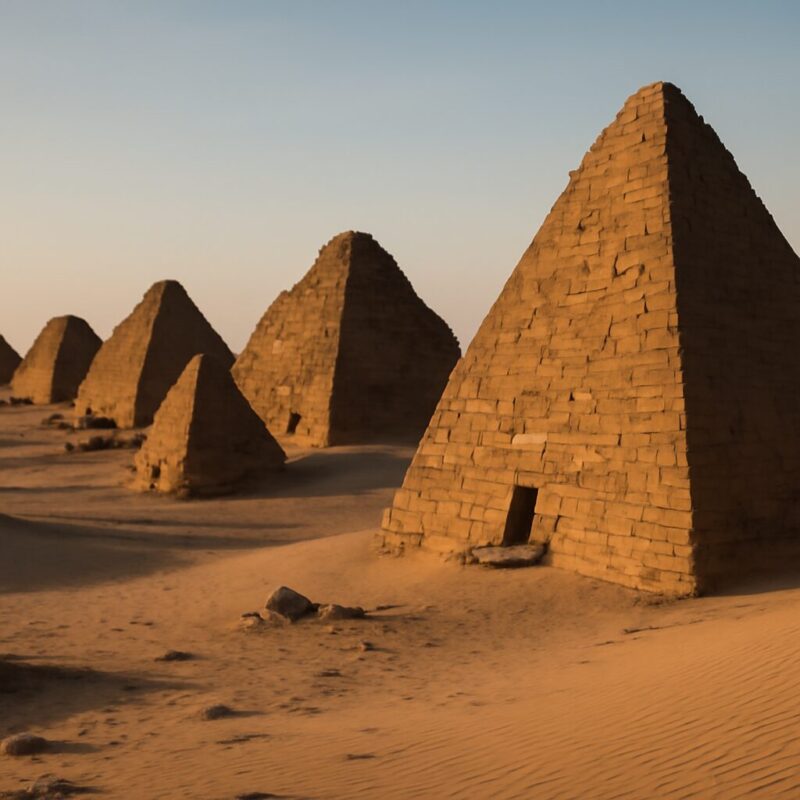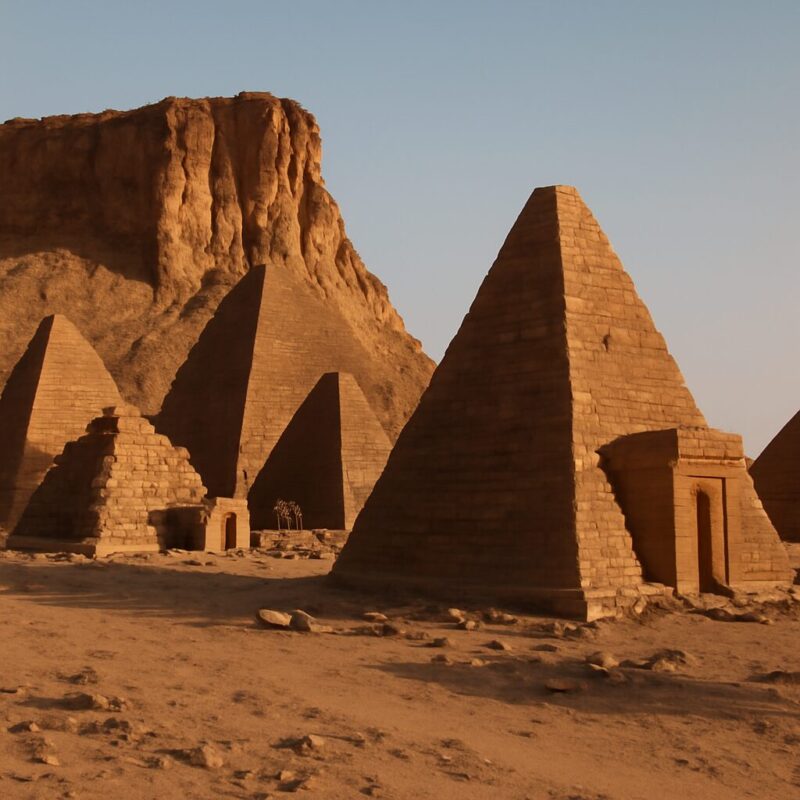
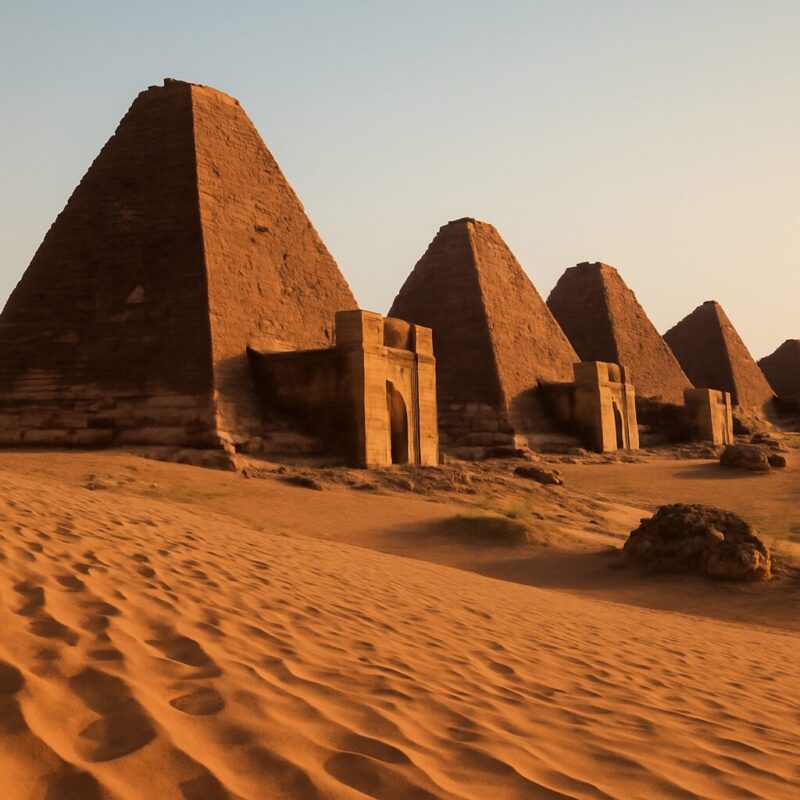
Far from the crowded sands of Giza, the Meroe pyramids rise from a dusty, rust-colored plateau in Sudan. They are the elegant, steep-sided sentinels of a forgotten kingdom. Built by the rulers of Kush, these structures feel more intimate and immediate than their Egyptian cousins; their sharp angles are softened by time, their peaks often broken, standing as stark silhouettes against an immense sky. What captures the imagination is their number—dozens of them, scattered across the hills, each marking the tomb of a king or queen who commanded a powerful African empire fueled by iron and trade. Walking among them, you’re struck not by overwhelming scale, but by a profound sense of quiet history, a whisper of a civilization that once rivaled pharaonic Egypt and left its defiant mark in stone.
Who Built Meroe pyramids?
The Builders of the Meroe Pyramids
The pyramids at Meroe were built by the rulers and elite of the Kingdom of Kush, specifically during the Meroitic period (c. 270 BCE – 350 CE). This civilization, centered on the city of Meroe in modern-day Sudan, was a powerful Nubian kingdom that had broken away from Egyptian cultural dominance and developed its own distinct language, script, and artistic style.
Purpose and Function
These pyramids served as monumental tombs for the kings and queens of Meroe. They were constructed as superstructures over burial chambers, marking the final resting places of the royal dead. The pyramids were part of extensive funerary complexes that included offering chapels where rituals for the deceased could be performed, reflecting a blend of indigenous beliefs and adapted Egyptian funerary practices.
Related Constructions from the Provided List
The Kushite civilization, which built the Meroe pyramids, also constructed other significant royal cemeteries. A highly relevant and earlier site is the Nuri pyramids, which served as the necropolis for Kushite kings during the Napatan period, immediately preceding the Meroitic era. Another significant related site is the Gebel Barkal royal tombs, as Gebel Barkal was a major religious and political center for the Kingdom of Kush for centuries.