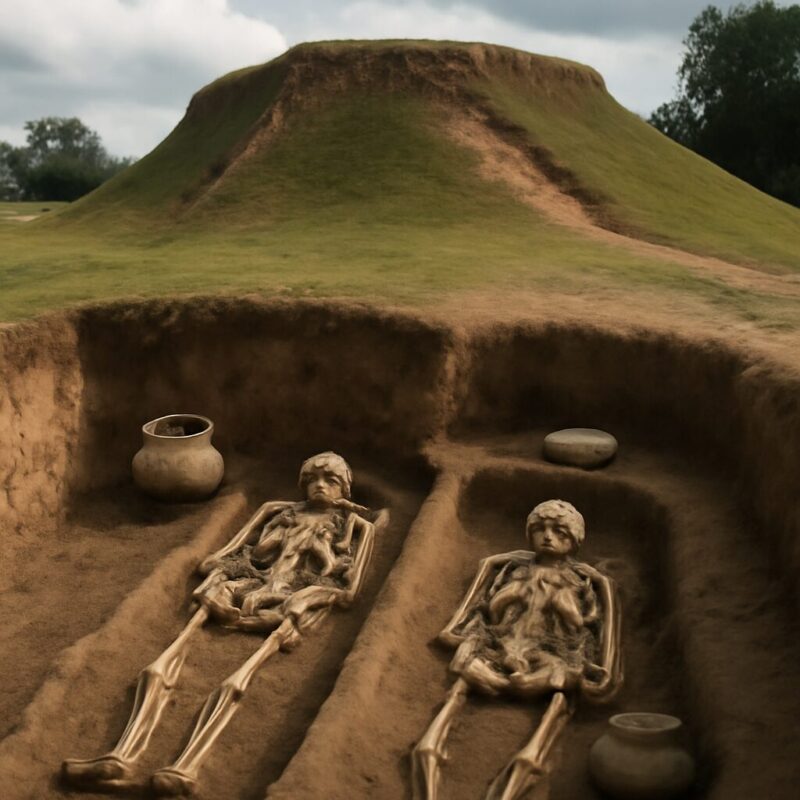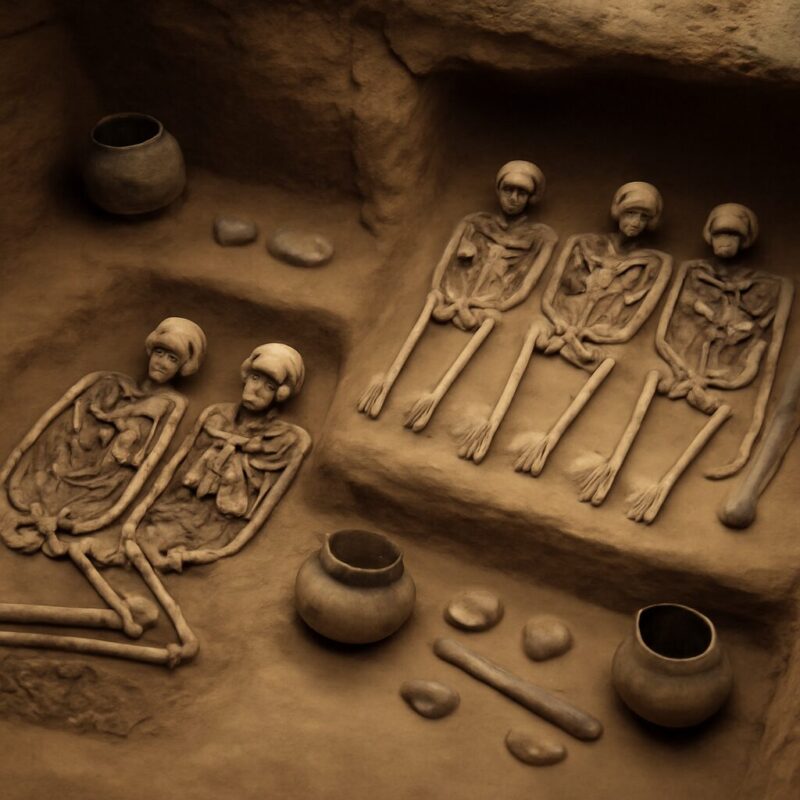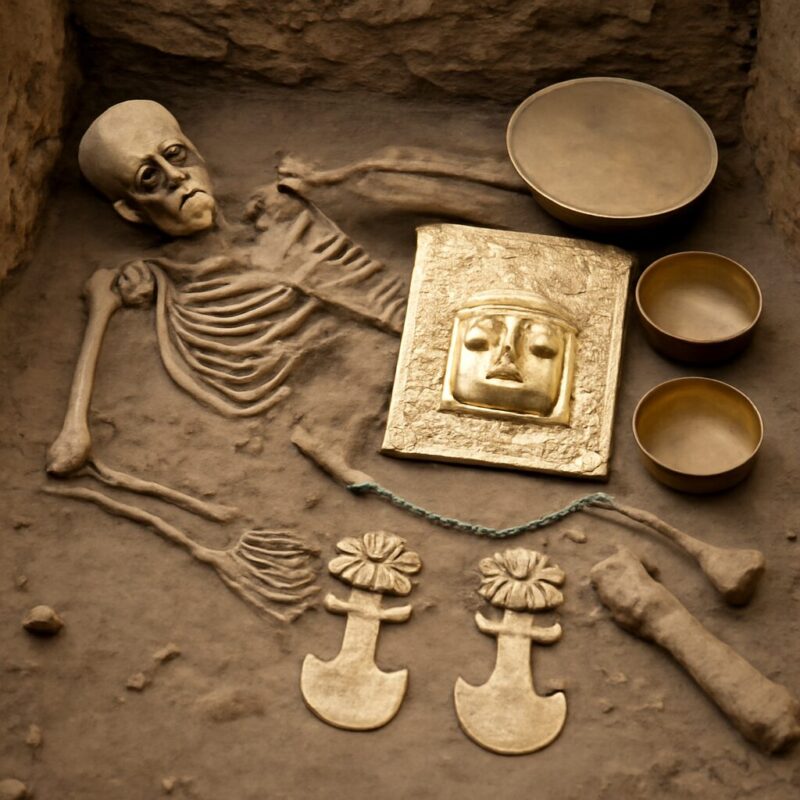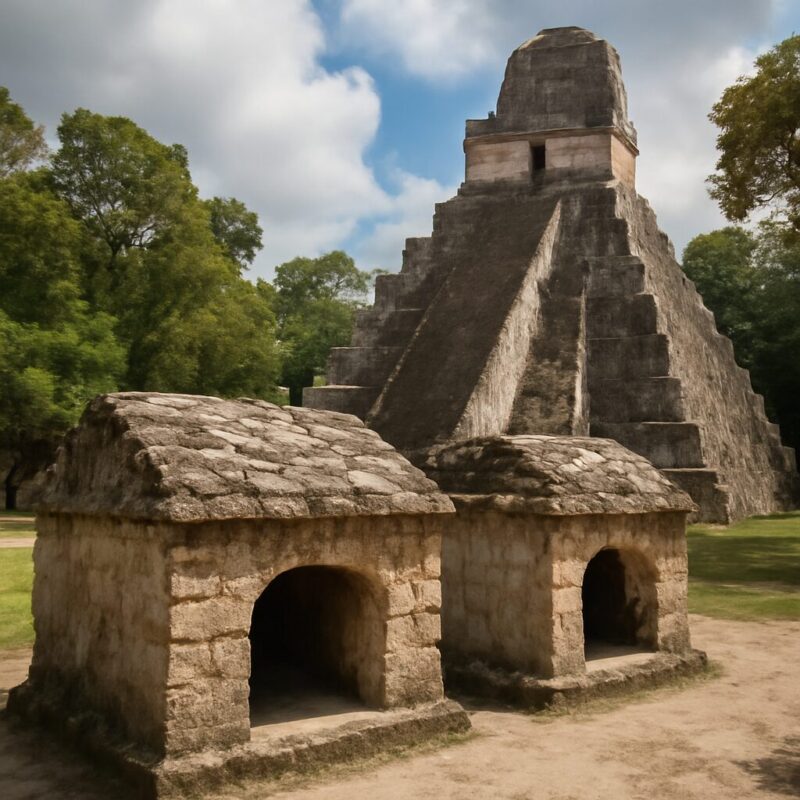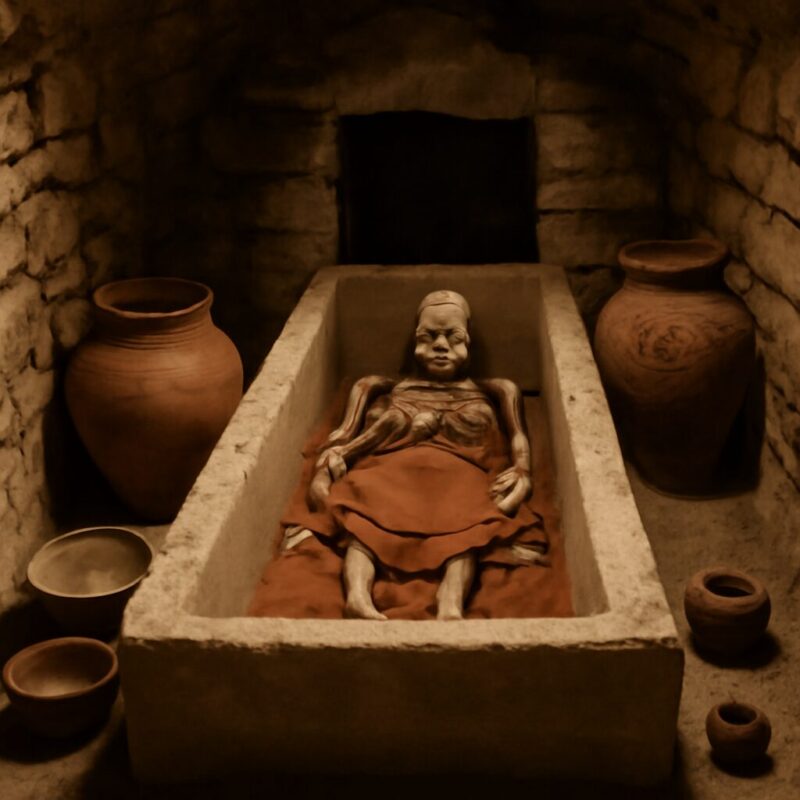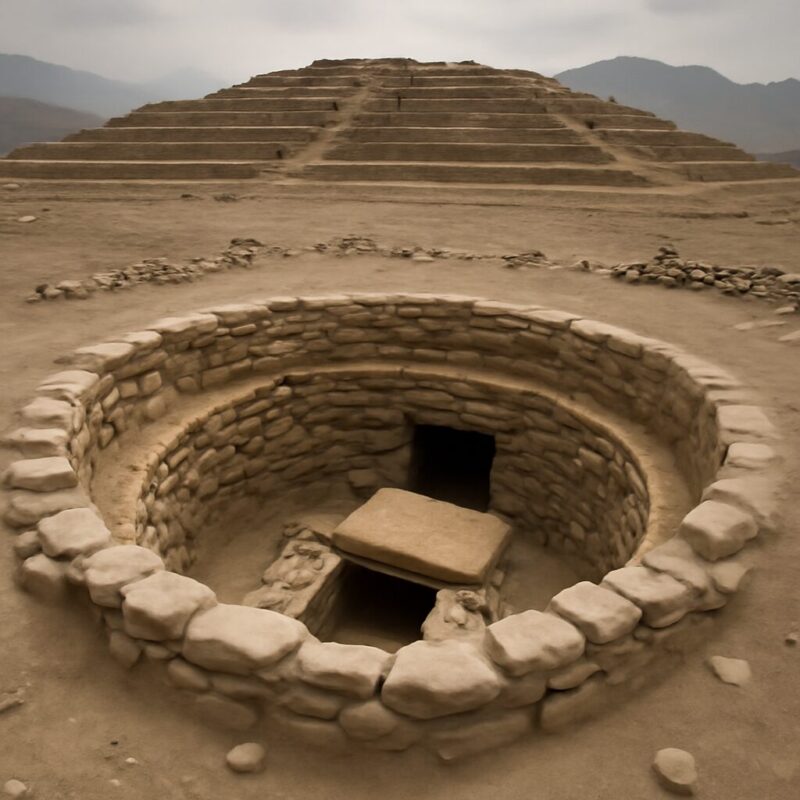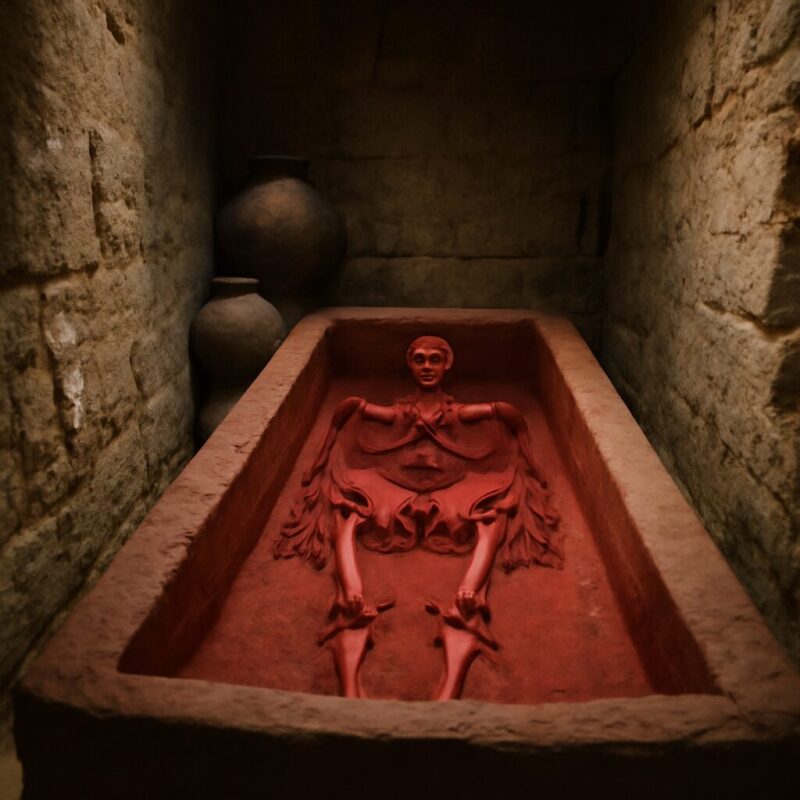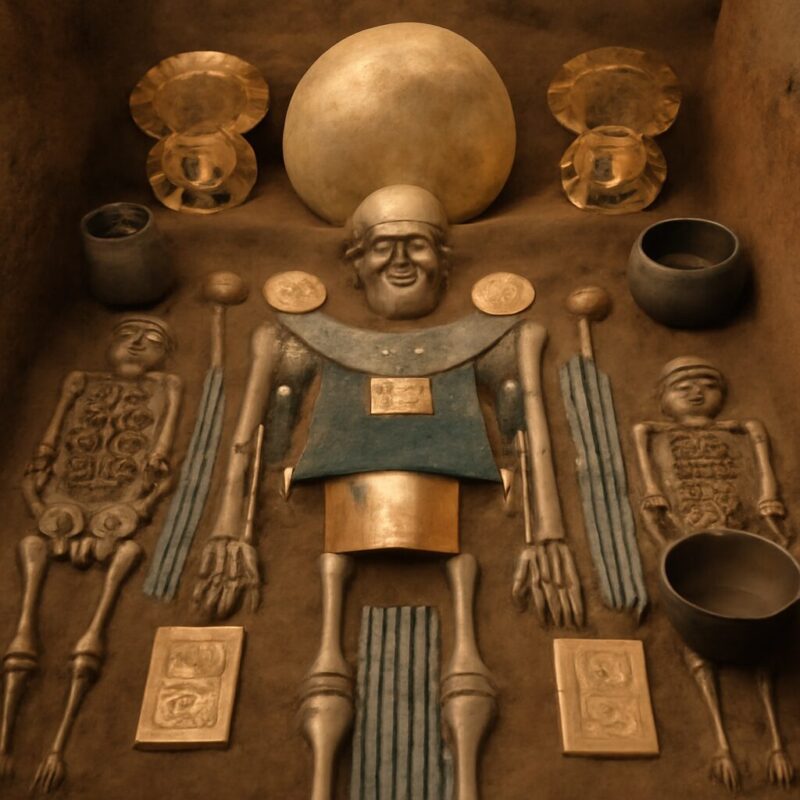
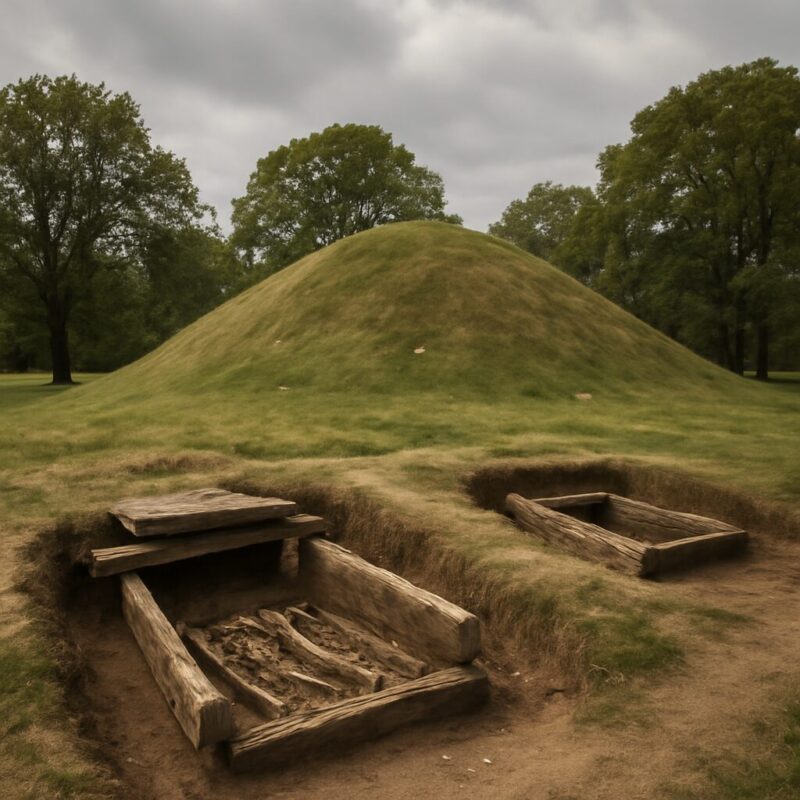
Picture a landscape not of lonely gravestones, but of monumental earth itself shaped into memory. Across the river valleys of ancient North America, the Mound Builders raised great earthen tombs—silent, grassy pyramids and undulating serpents of soil that held their honored dead. These were not mere holes in the ground, but architecture. Within their cores, log-lined chambers sheltered the departed, often accompanied by breathtaking gifts: pearls from distant waters, sheets of hammered copper, and delicate effigy pipes carved in the shape of otherworldly birds. To place a leader inside such a mound was to weave them into the very flesh of the land, a permanent testament of a community’s hand and heart, turning the earth into a monument that would whisper for a thousand years.
Who Built Mound Builder burials?
Who Built the Mound Builder Burials?
The term "Mound Builders" refers to various pre-Columbian Native American cultures that constructed earthen mounds across a vast region of North America, primarily east of the Mississippi River. These were not a single people but a succession of distinct cultures over thousands of years. The major mound-building cultures were:
- The Adena Culture (c. 1000 BCE–200 CE): Among the earliest, centered in the Ohio River Valley, known for conical burial mounds.
- The Hopewell Culture (c. 200 BCE–500 CE): Known as the Hopewell Exchange Network, they built elaborate geometric earthworks and mounds for burial and ceremonial purposes across the Eastern Woodlands.
- The Mississippian Culture (c. 800–1600 CE): The last and most complex, building large, flat-topped platform mounds supporting temples, elite residences, and burials, often around central plazas in major chiefdoms.
Why Were the Mounds Built?
The mounds served multiple, often overlapping purposes:
- Burial: Many mounds were necropolises for elite individuals, containing grave goods like copper artifacts, shell beads, and mica sheets.
- Ceremonial & Religious Centers: They were focal points for rituals, marking sacred landscapes and connections to cosmological beliefs.
- Political & Social Symbols: The scale and complexity of mound construction demonstrated the power and authority of chiefs or religious leaders, unifying community labor.
- Platforms for Structures: Especially in the Mississippian period, flat-topped mounds elevated important buildings like temples or chief's houses above the surrounding town.
Other Highly Relevant Mound Builder Sites
From your provided list, the most directly related sites are specific, monumental examples of this broader tradition:
- Cahokia Mound burials: This was the largest and most influential urban settlement of the Mississippian culture. Its mounds, including the colossal Monks Mound, were central to its political and religious life.
- Etowah Mound burials: A major Mississippian chiefdom site in Georgia, known for its large platform mounds and elite burials containing sophisticated artifacts.
Cultural Parallels in Tomb Construction
While geographically and culturally distinct, other ancient societies similarly used large-scale earthworks or mounds for elite burial and social display, creating interesting parallels:
- Kofun burial mounds: The keyhole-shaped tombs of early Japanese elites are a direct functional and symbolic parallel to the Mound Builder tradition.
- Sutton Hoo: An Anglo-Saxon burial mound in England, demonstrating how earthen mounds were used for high-status burials across the world.
- Newgrange: A much older Neolithic passage tomb in Ireland, covered by a large, engineered mound, highlighting the ancient and widespread use of mounds as monumental tombs.
- Samoa royal burial mounds: Shows the practice of mound burial for royalty in Polynesian cultures.